A useful brief separates requirements from proposed parts
The result your product needs
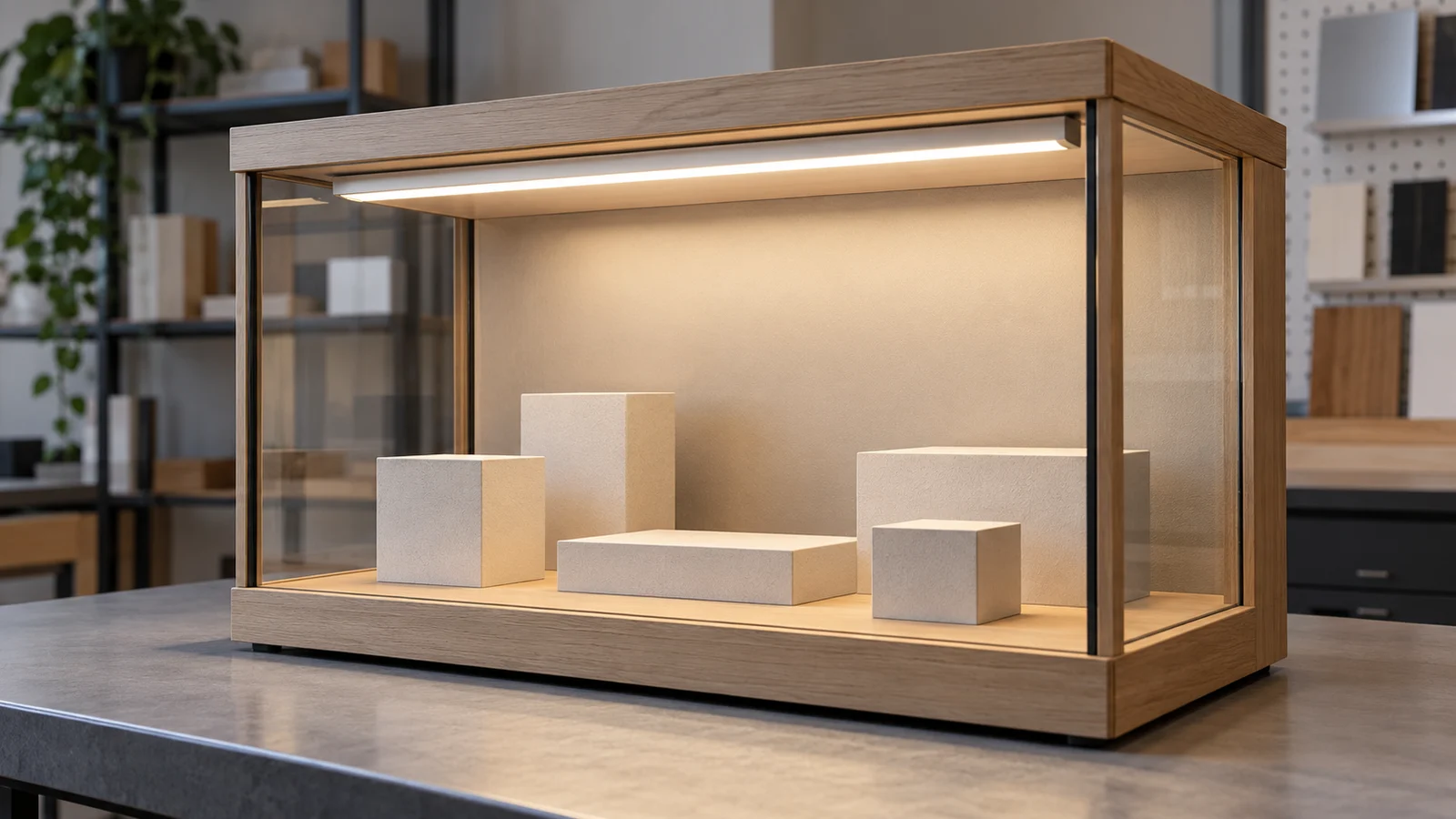
A useful custom LED lighting brief lets another engineer understand the intended result without having to guess how your product works. Start with the job: illuminate a product face, make a graphic readable, or put a continuous line of light behind a furniture detail. Name the person viewing it and the position from which it will be seen.
“A bright LED strip for our display” leaves several decisions mixed together. The strip is a proposed component; the result might be evenly lit merchandise with the source hidden from the shopper. Writing that result gives the designer room to consider a different source position, diffuser or complete assembly.
Choices the supplier can still propose
Separate a required outcome from a preferred construction. If your host already has a fixed mounting rail, that interface may be mandatory. If someone suggested an aluminum carrier before the thermal and mechanical work began, label it as a proposal. This distinction helps you compare responses: a changed construction can meet the same need, while a visually similar part may leave the need unanswered.
Define what you are buying and where it must fit
Board, module or complete assembly
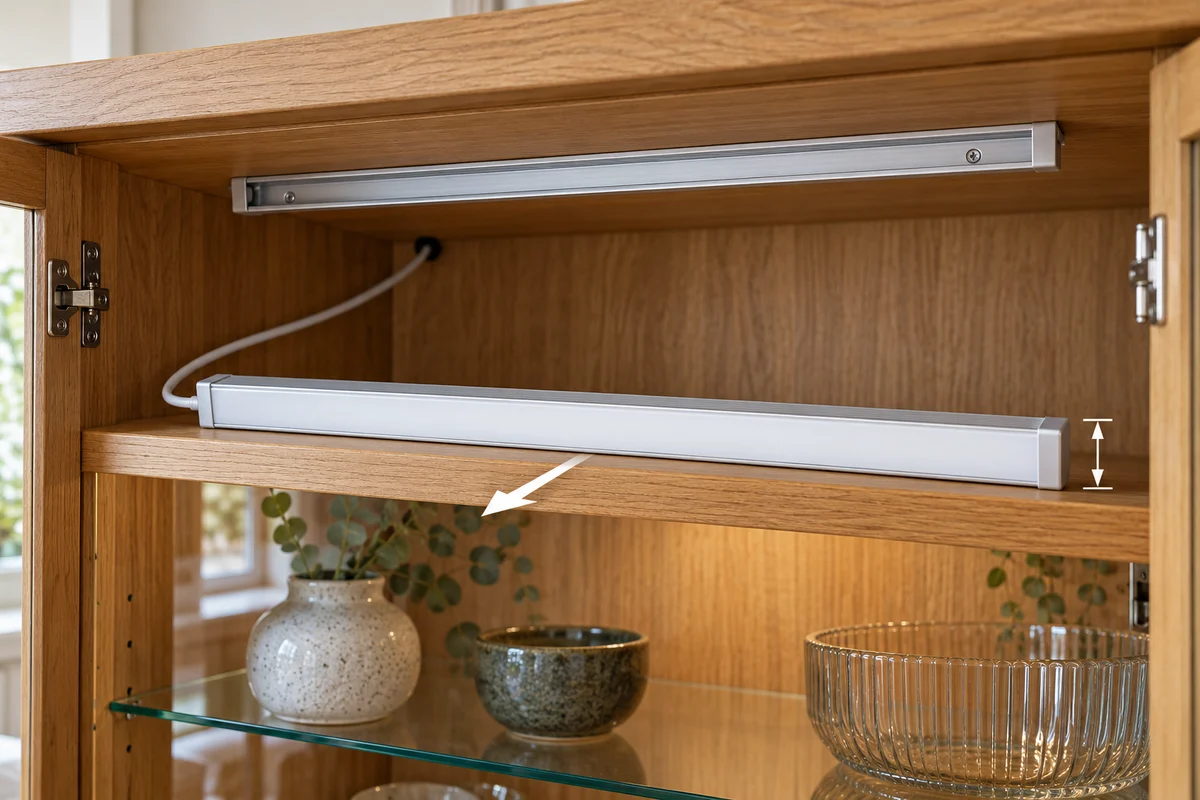
State the supplied unit explicitly. A populated LED board, a board with a carrier and diffuser, and a complete light bar leave different work for your team. List the included mechanical parts and identify who provides the mating host features. Otherwise one quotation can exclude the items another includes.
A useful clause is: “Supply a removable light assembly including its light source, carrier, cover and agreed lead; the cabinet structure and host power system remain outside this supply.” Keep the exact contents open where the design has not settled them. VST’s host-product custom LED light overview explains the integration scope behind this kind of request.
Finished envelope and access space
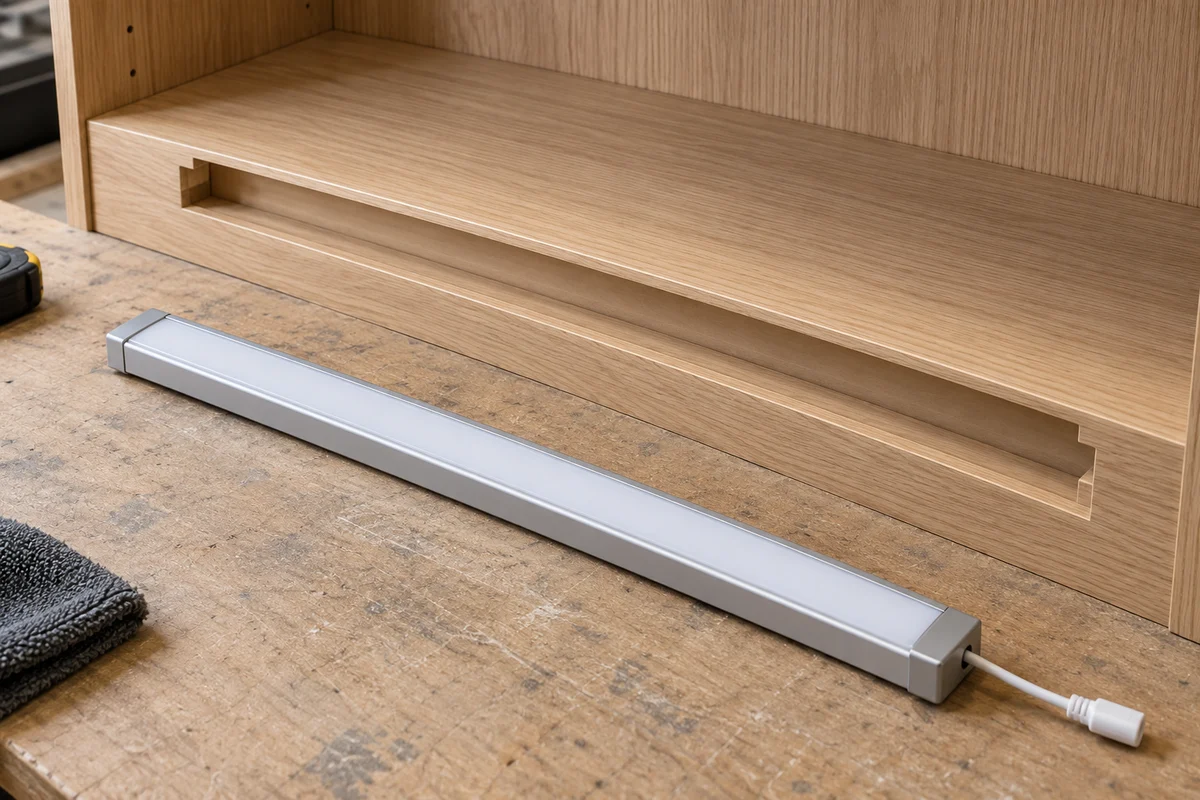
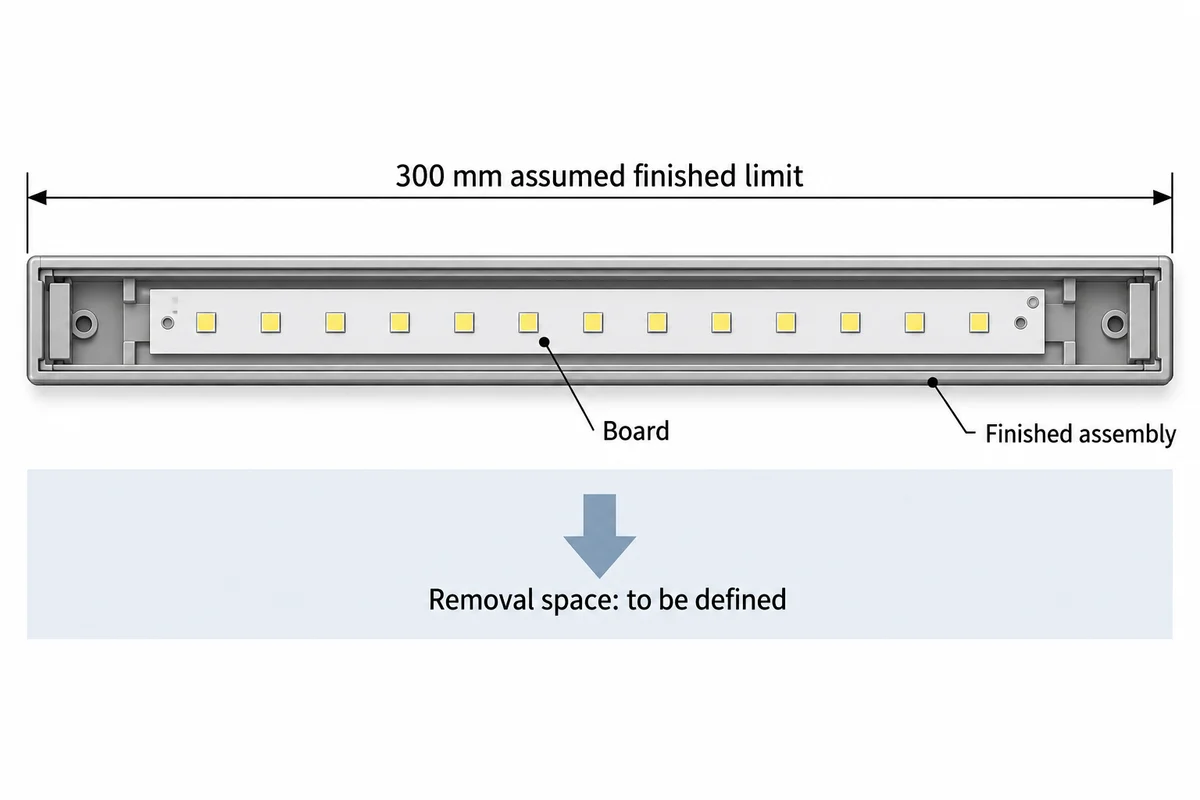
Give dimensions for the finished supplied assembly, including end features and projections, against a named host reference. Then describe the space needed to install and remove it. Board length alone leaves out a cover, mounting features and connector access. A part can sit inside a cavity yet still be impossible to insert along the available route.
Identify which drawing controls the available space. A rendering can explain appearance, but a dimensioned host section is needed when fit determines the design. Leave tolerances for engineering agreement unless your host drawing already establishes them.
Use the same reference surfaces in the host and assembly drawings. For example, locate a mounting feature from the host’s fixed rail, rather than from an unselected cover edge. If the host opening changes between models, show those dimensions separately. A supplier can then distinguish one shared interface from several different fit conditions.
Turn the light effect into a comparable requirement
Target surface and viewing conditions
Locate the surface receiving the light and describe its relationship to the source. Shelf depth, the position of a graphic and a shopper’s viewing direction can change the useful result. Include relevant surfaces: a glossy package can reflect a visible source that looks unobtrusive beside matte merchandise.
If the desired appearance is based on a reference sample, identify the sample and the conditions for comparison. A phone photograph with automatic exposure is useful context, but its apparent brightness is a weak acceptance reference on its own.
Output and color fields with their conditions
When an engineering target exists, specify what is being measured. Luminous flux in lumens describes light output; illuminance in lux describes light arriving at a surface under stated geometry. Neither can be substituted for the other without considering distribution and distance. Record the target plane when illuminance is relevant.
Color temperature in kelvins and color-rendering requirements describe different characteristics. State a required value or agreed reference only when the product team has selected it. If they remain undecided, describe the merchandise and intended appearance so the next proposal addresses that choice.
Write the observation into the clause: “Assess source visibility from the identified front and side viewing positions with the finished cover installed.” This is more useful than “no glare” alone. The team still needs to agree what counts as an acceptable result, but the clause identifies the object and the condition for that decision.
| Starting phrase | Make the condition explicit | Usable requirement form | Still needed |
|---|---|---|---|
| Bright enough | Merchandise face at its installed position | Propose an output and distribution for the identified target surface | Agreed photometric target and evaluation conditions |
| No visible dots | Normal viewing positions and finished cover | The assembled source should appear continuous from the defined viewing area | Reference appearance and agreed review method |
| Warm white | Display beside existing store lighting | Select a CCT and color reference for this installation context | Chosen target and allowed variation |
Describe the host interface without designing the circuit
Known supply and control information
Report the existing supply’s identity, documented output and relevant host controls. If the host has no defined supply yet, say so. A nominal voltage by itself leaves current regulation, available capacity, protection and control behavior unresolved.
The requirement can state that the proposed assembly must be evaluated against a named host supply and control arrangement. Selecting the LED drive architecture and demonstrating the combination belong to the responsible electrical design team. Avoid choosing a driver from a brief’s voltage field alone.
Mounting, lead exit and access
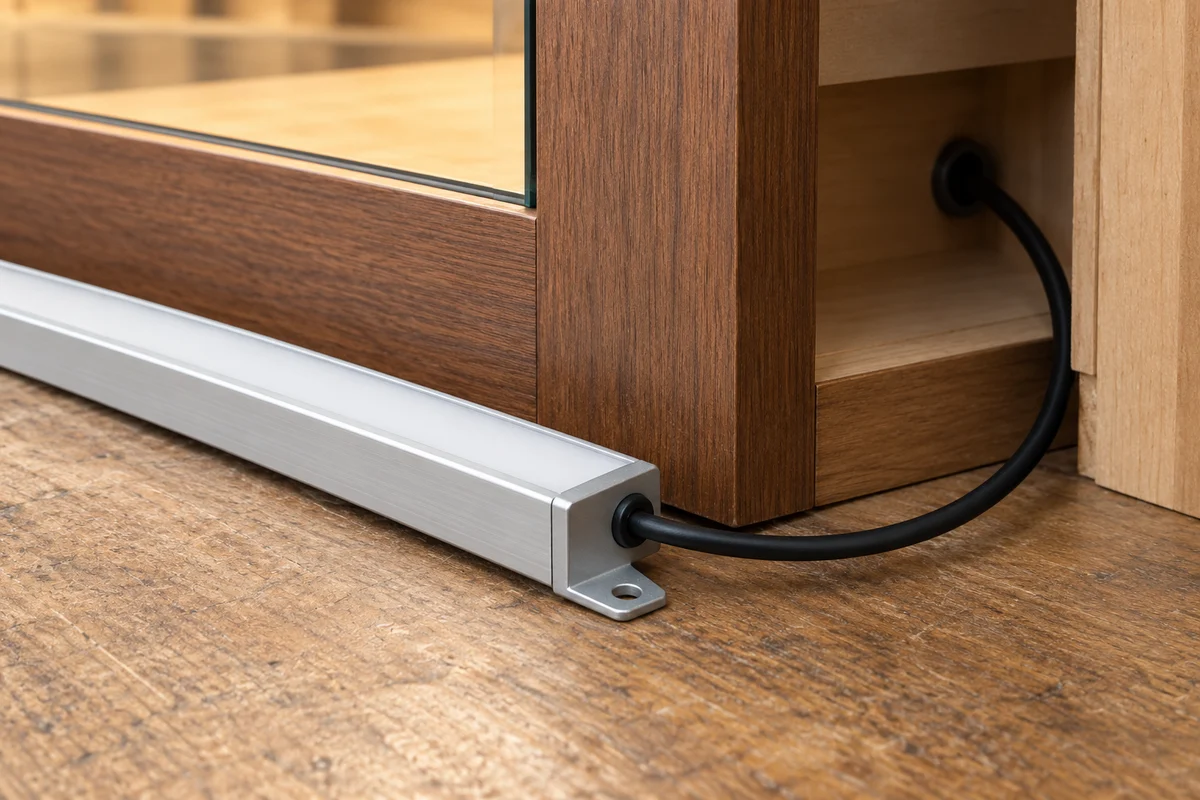
Mark the attachment surfaces and the direction a lead must leave the assembly. Explain what occupies the neighboring space, such as a drawer runner or a removable shelf. Specify the mating connector identity only if the host already controls it; otherwise describe the connection’s location and service task before a connector is selected.
A drawing should distinguish the assembly’s normal occupied space from access needed to mate a connection. The person reviewing the brief can then see whether changing the lead exit solves a fit problem or whether the carrier must change. The custom LED drawing FAQ addresses the detailed drawing questions that follow.
State use conditions and the replaceable unit
Environment and duty
Describe the actual use: indoor cabinet, enclosed equipment space, or another defined setting. Add operating hours, nearby heat sources, cleaning exposure and movement where they affect the assembly. Distinguish measured conditions from estimates. A room-temperature value cannot describe a warmer enclosed mounting location unless that relationship has been established.
These inputs guide the subsequent materials, thermal and protection assessment. Do not replace the use description with an unexplained demand for “industrial quality.” That phrase gives the designer little basis for selecting a construction or planning evaluation.
What service should replace
Decide whether the intended service unit is a complete light assembly or an identified internal part. Explain who reaches it and what host parts may be removed. A sealed-looking exterior can still be designed around a removable assembly; a visible screw alone says little about the permitted service route.
This choice affects the carrier, connections and spare-part definition. If your program needs replacements after the original fixture rollout, record the required support period as a commercial requirement to discuss. It becomes a commitment only through the applicable agreement.
Resolve conflicts before asking for a fixed quotation
Conflicts that change the design
Read the brief against the host drawing, including its revision. “Use the full opening” can conflict with clearance for end features or removal. A required cable exit can conflict with the host’s closed rear wall. Identify which condition is fixed and which can change before asking someone to price a final construction.
| Conflicting inputs | Decision affected | Required disposition |
|---|---|---|
| Board length copied as maximum finished length | Space for cover, end features and mounting | Establish a finished assembly envelope; derive board space afterward |
| Rear lead exit beside a closed host wall | Cable route and installation access | Choose a permitted host route or revise the exit before detailed layout |
| Fully concealed assembly with no service route | Replacement scope and host construction | Identify an accessible removal direction or reconsider the service unit |
Required, proposed and still open
Use these three labels where they change the response. A required host envelope constrains the design. A proposed cover invites an alternative. An open optical target needs a named decision owner. An unresolved item can remain in a concept brief when its effect is clear; a quotation tied to it needs a stated assumption or an exclusion.
When two required outcomes compete, record a priority or request a feasible alternative. If the finished depth is fixed but the desired appearance remains negotiable, the response should explain what optical arrangement is achievable within that depth. If appearance is fixed instead, the host team may need to consider a different section. Leaving both as unconditional requirements hides the choice.
Use different detail levels for concept, sample and production
A concept brief can contain controlled unknowns
Early work needs enough information to choose a feasible direction. The host geometry, intended light effect and supply boundary may be sufficient to compare construction routes while an exact output target remains open. Make the next deliverable explicit: a proposed arrangement with the unresolved choices explained.
Later decisions need a defined reference
Sample work needs an identified construction and agreed evaluation questions. Production requires the applicable drawings, component definition and acceptance requirements to describe the same version. A sample comment such as “looks good” leaves purchasing unable to tell whether a changed cover is an acceptable equivalent.
Keep the brief as the statement of need, with links to its engineering outputs. The custom LED lighting development process explains how those outputs move toward production. Repeating every drawing field inside several documents creates competing references when one changes.
Read a complete host-product brief
From an incomplete request to usable clauses
Consider an illustrative indoor display request: “Put a bright light across the top and hide the dots.” For this example only, assume a 300 mm maximum finished length and a host described as having a nominal 24 V DC supply. These are hypothetical customer inputs, not product ratings or a selected electrical design.
| Brief field | Completed illustrative requirement | Basis and next decision |
|---|---|---|
| Supply boundary | Propose a removable source, carrier and cover assembly; host cabinet excluded | Assumed buying scope; agree lead and attachment contents |
| Mechanical boundary | Finished assembly fits within the assumed 300 mm length limit | Host input; remaining section, tolerances and removal route need drawings |
| Visual task | Illuminate the merchandise face while hiding discrete sources from normal shopper positions | Customer intention; select target, reference and evaluation conditions |
| Host interface | Evaluate the proposal against the documented host supply, initially described as nominal 24 V DC | Supply identity, capacity, controls and drive arrangement remain engineering decisions |
| Service | Develop a front-access removal route without dismantling the fixed cabinet body | Assumed service goal; confirm geometric feasibility |
What the brief lets you decide next
This version separates the desired effect from the proposed hardware and exposes the missing decisions. The next useful response is a bounded assembly proposal with a host-fit arrangement and optical evaluation plan. A price for an unspecified length of strip would answer a different question.
You can now use the same method on your own host: define the result, write the supplied boundary, and identify which unresolved input changes the design. That creates a practical starting point for engineering without pretending the brief is a finished product specification.