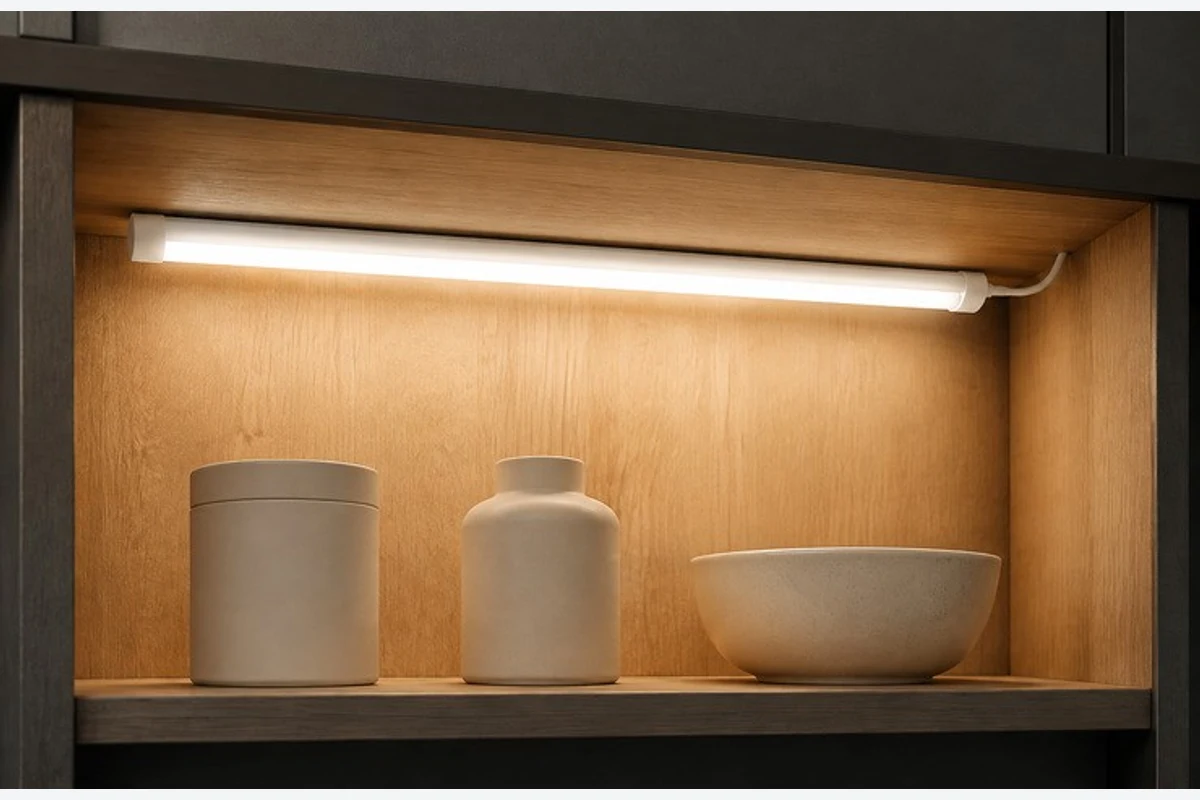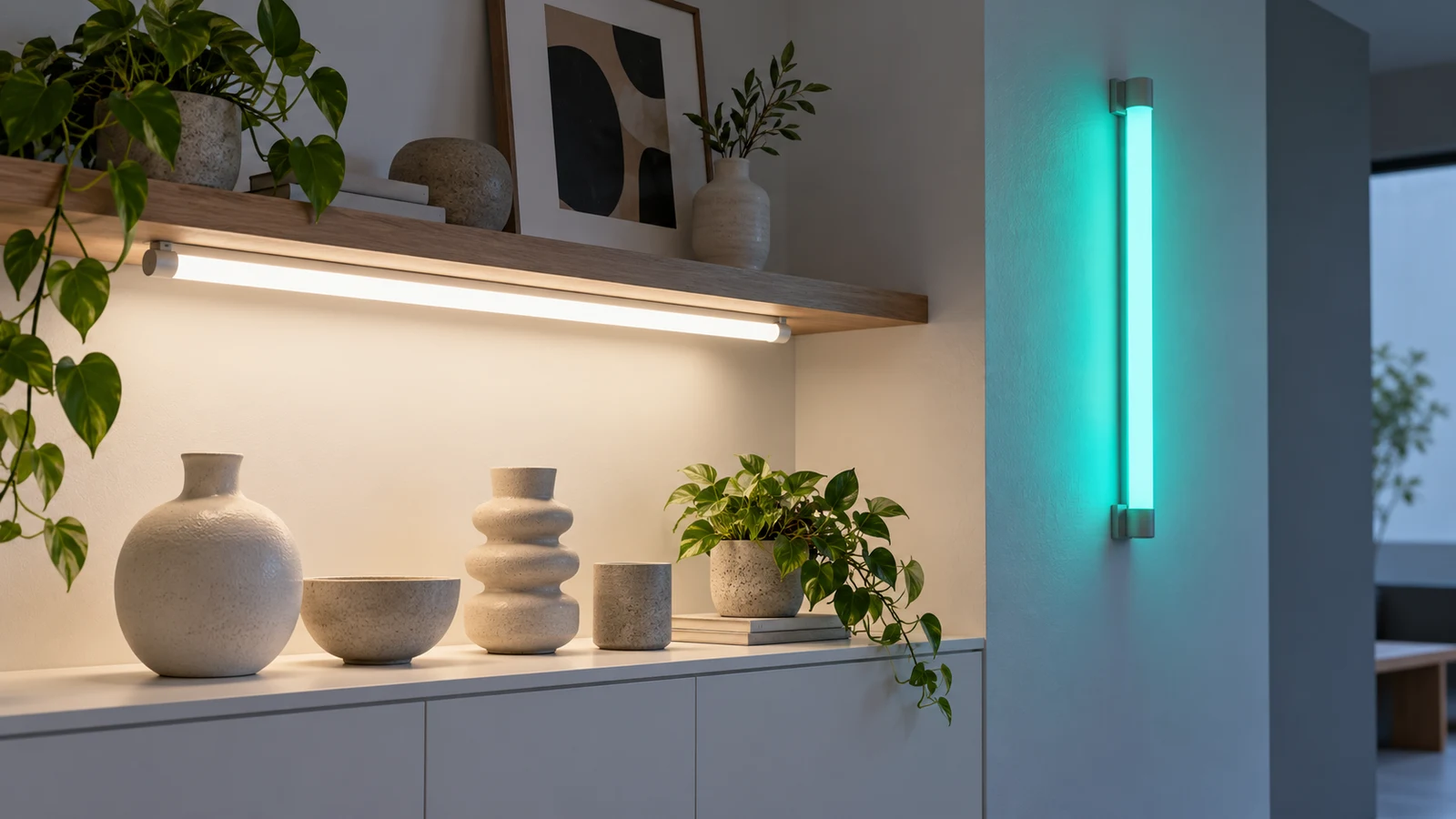
“Color changing” can mean choosing one white-light setting, adjusting white light during use, or creating saturated colors. Those requests lead to different products. A tube with several selectable white settings may be useful for a fit-out, while a changing display feature needs a supported control function.
For an OEM buyer or lighting specifier, the first decision is what should change and who should control it. Match that function to the application before comparing the outside shape, a remote-control picture or a list of available color temperatures.
Which part of the light color needs to change?
A white-light choice or a changing scene
A fixed white-light choice serves a space that should retain one selected appearance. Selectable CCT can offer several white settings in an identified product. Tunable white describes an operating function that changes white appearance, while full-color tuning extends the task to distinct hues.
Brightness is another variable. You may want less light while keeping the same white, or a warmer appearance as the light dims. These are different user requirements even when the sources share a similar long, diffused outline.
State the behavior in ordinary terms: choose one white for the completed room; let the user adjust white and brightness separately; or introduce a colored accent. A clear sentence like that gives the specification a functional starting point instead of relying on an ambiguous product label.
Selectable CCT provides defined white-light options
A setting chosen for the application
CCT means correlated color temperature and describes white appearance. A selectable-CCT product provides identified choices. For a fit-out, the useful function may be selecting a white that suits the surrounding finishes and keeping it there afterward.
The available settings can reduce the need to choose between otherwise similar versions at the earliest purchasing stage. However, the supplied product still has a particular adjustment method and operating scope. Use its instructions for when and how the setting may be changed.
The published setting and its actual adjustment method
A list such as 3000K, 4000K and 6500K identifies white-light choices. It does not identify whether adjustment is local, remote, continuous or permitted while powered. Those are separate functional fields in the actual product information.
| Function | What changes | When it is useful |
|---|---|---|
| Selectable CCT | A stated choice among white settings | One selected white is needed for the application |
| Tunable white | White appearance during supported operation | Users need changing white scenes |
| Dim-to-warm | White appearance changes with dimming | The intended experience links warmer light to reduced output |
| Full-color tuning | Distinct hues and supported color mixtures | A colored accent or changing visual feature is required |
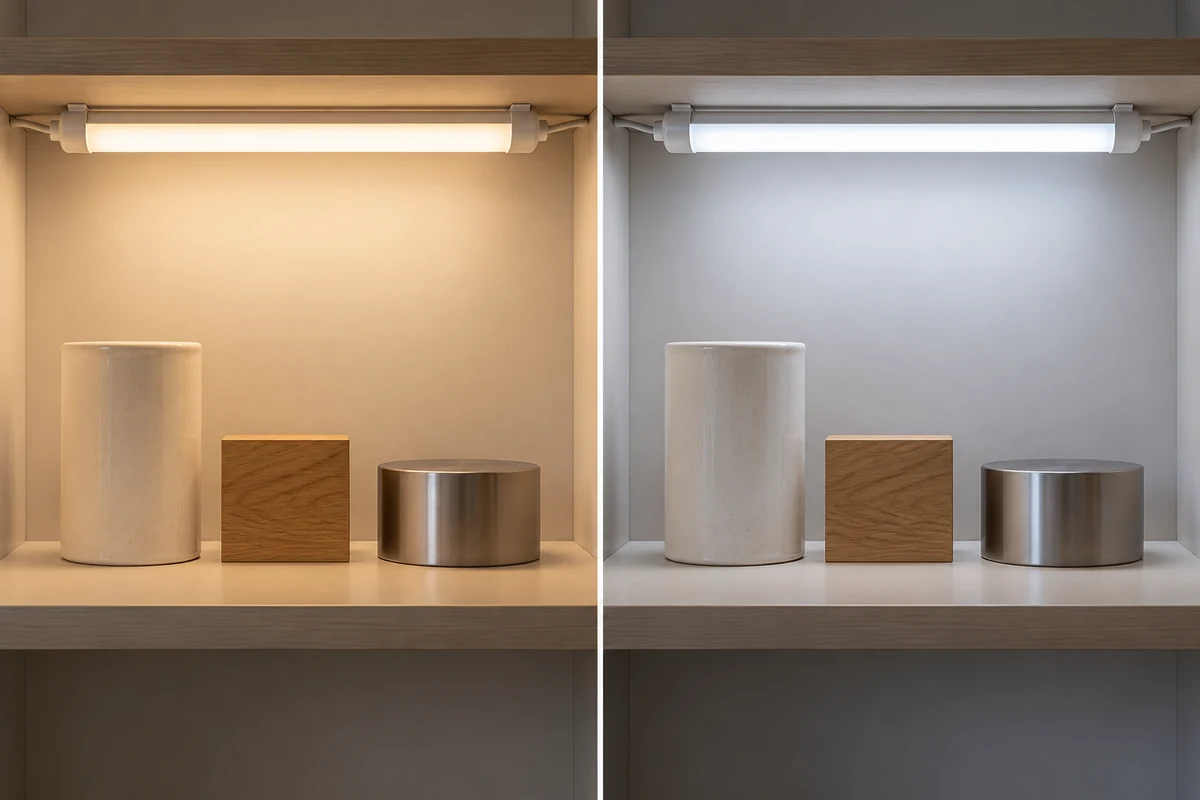
Tunable white adjusts the white appearance during use
Controlling the white mix
Tunable-white systems use supported source and control arrangements to vary white appearance. Some mix warm-white and cool-white LED groups; other designs use more primaries. The actual design determines the available range and how the output behaves through it.
The US Department of Energy’s color-tunable product overview separates white tuning from other color functions. It is useful conceptual background, not a circuit specification for a particular tube.
Brightness and CCT as separate requirements
If you want a room to become dimmer without changing white appearance, specify those as independent functions. The user interface should provide the intended behavior, and the source/driver arrangement must support it.
Consider the user action itself. A person selecting a preferred white for a tenant’s room may only need an occasional adjustment. A space that changes its white scene during ordinary use needs that behavior available through the intended control. Both requests concern CCT, but they differ in who makes the change, when it occurs and how conveniently the finished system must expose it.
A change in white setting can also affect output or the appearance of objects. Compare the relevant setting rather than assume that the maximum figure applies everywhere. A single CCT range gives only one part of that description.
Dim-to-warm links color change to dimming
When the warmer appearance follows lower output
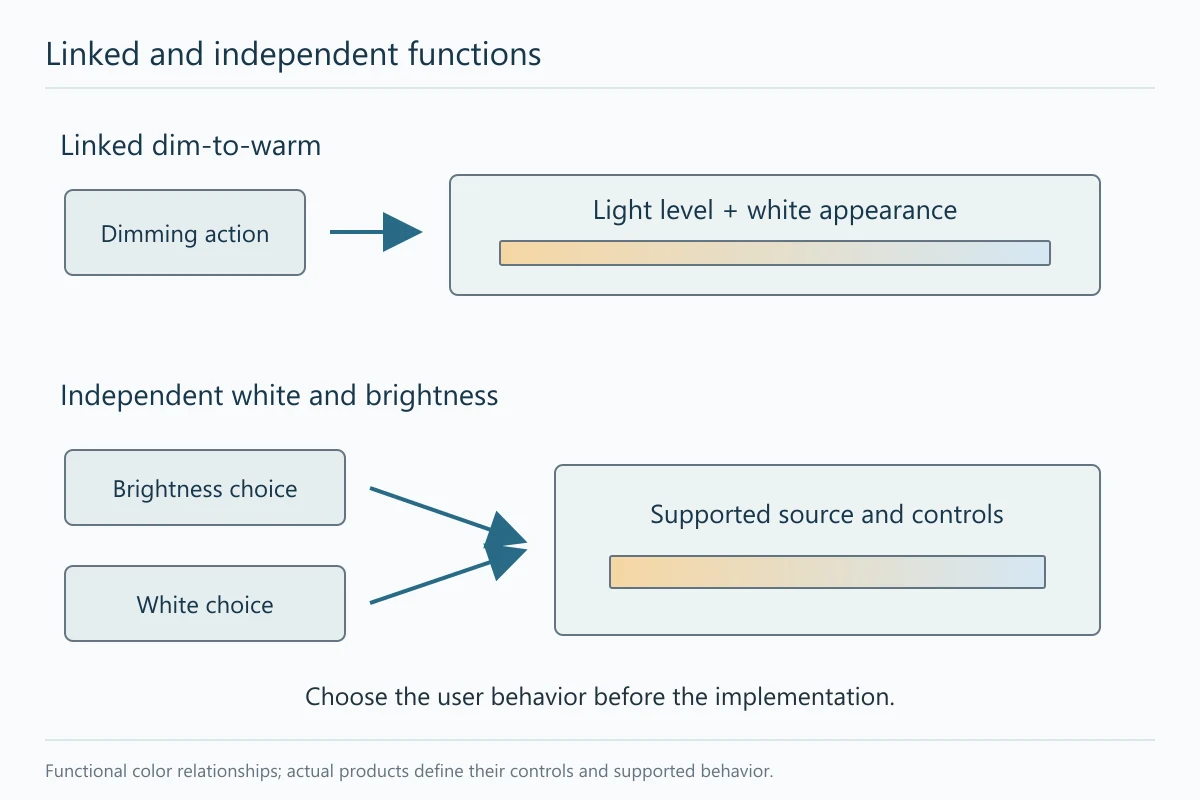
Dim-to-warm describes a linked behavior: as output decreases, the white appearance becomes warmer. That relationship can suit a hospitality or decorative lighting brief where the desired lower-light scene should also feel warmer.
The effect belongs to the selected product and its supported control. A dimmable label alone does not establish it. The lamp may instead dim at an approximately fixed white setting, or use another intended response.
When independent control is preferable
For a display that needs the same white appearance at several light levels, linked warm dimming can be the wrong function. Independent white tuning and brightness control better describe that requirement. Conversely, a deliberately linked experience may not need two separately adjusted controls.
This is a user-behavior decision before it is a protocol decision. Describe what happens when someone reduces the light, then select a system that provides that behavior. Avoid buying a more complicated interface merely because it offers additional settings the task will not use.
RGB and RGBW address a different color task
Saturated color and useful white light
Full-color tuning combines independently varied source primaries to produce distinct hues. RGB names red, green and blue; an RGBW description also identifies a white component. Other combinations exist, so the initials are a starting description of the source family.
A colored accent and everyday white task lighting should be evaluated separately. An attractive blue scene does not tell a buyer how merchandise will look under the product’s white setting. A dedicated white component is relevant, but its presence alone does not establish a particular rendering quality or output.
Color labels and the selected output record
State the intended hue or white-light task, then compare the actual supported state. The brightness available at one color mixture can be different from another. No universal brightness or efficiency ranking follows from RGB, RGBW or tunable white as a category.
| Brief | Useful starting function | What would change that choice |
|---|---|---|
| Keep one white appearance after fit-out | A suitable fixed or selectable-white version | Users later require changing white scenes |
| Vary white and brightness separately | Supported independent white tuning | The intended behavior instead links warmth to dimming |
| Create a saturated-color accent | An appropriate full-color system | The same source must also meet a demanding white-light task |
The source and control have to form one intended system
Where the color command is interpreted
A user action becomes a control command, which the intended electronics interpret to change source output. The relevant functions can sit within a complete product or involve designated separate equipment. The actual architecture determines the interfaces and equipment required.
A protocol name cannot supply that complete arrangement. A driver version, receiver, user interface and source must support the intended combination. Neither a similar connector nor a familiar remote guarantees that relationship.
Control groups and the required user action
Decide which sources should change together. A white task area and a colored feature may need independent groups. If they are put under one user action, changing the display scene can also change lighting that should remain stable.
The tube dimming compatibility guide develops the brightness-control question. Keep the color function and grouping requirement attached to it rather than repeat the whole control-selection process here.
Read one tube’s settings and control fields together
The identified 3CCT product record
Signify’s CorePro LEDtube 600mm HO 7.7W 3CCT T8, order 929004320402, lists three white settings: 3000K, 4000K and 6500K. Its control section separately states Dimmable: No and Wireless Technology: Not applicable.
Those fields can coexist because they answer different questions. The CCT list identifies available white settings. The dimming field describes brightness-control scope, while the wireless field addresses another function. None should silently replace the others.
The same record lists 850lm at 3000K and 900lm at the other two settings. Those are attributed outputs for that product, not a rule that cooler light is always brighter. They show why the setting belongs with an output figure: selecting a different white can change the published number even when the product retains the same nominal power description.
A setting is not the same field as dimming or wireless control
This attributed manufacturer entry is a 220-240V selectable-white product with its own control description. Its setting list, dimming field and wireless field together describe that version. Read the corresponding fields of a proposed VST product in the same way, using the information for the actual offered version.
VST’s published T8 platforms offer another kind of statement: a 2700K-7000K CCT range. That range describes the company offering. It needs a specific supported version before it can identify a dynamic white-tuning function. Likewise, a menu of control options does not make one supplied lamp compatible with every listed system.
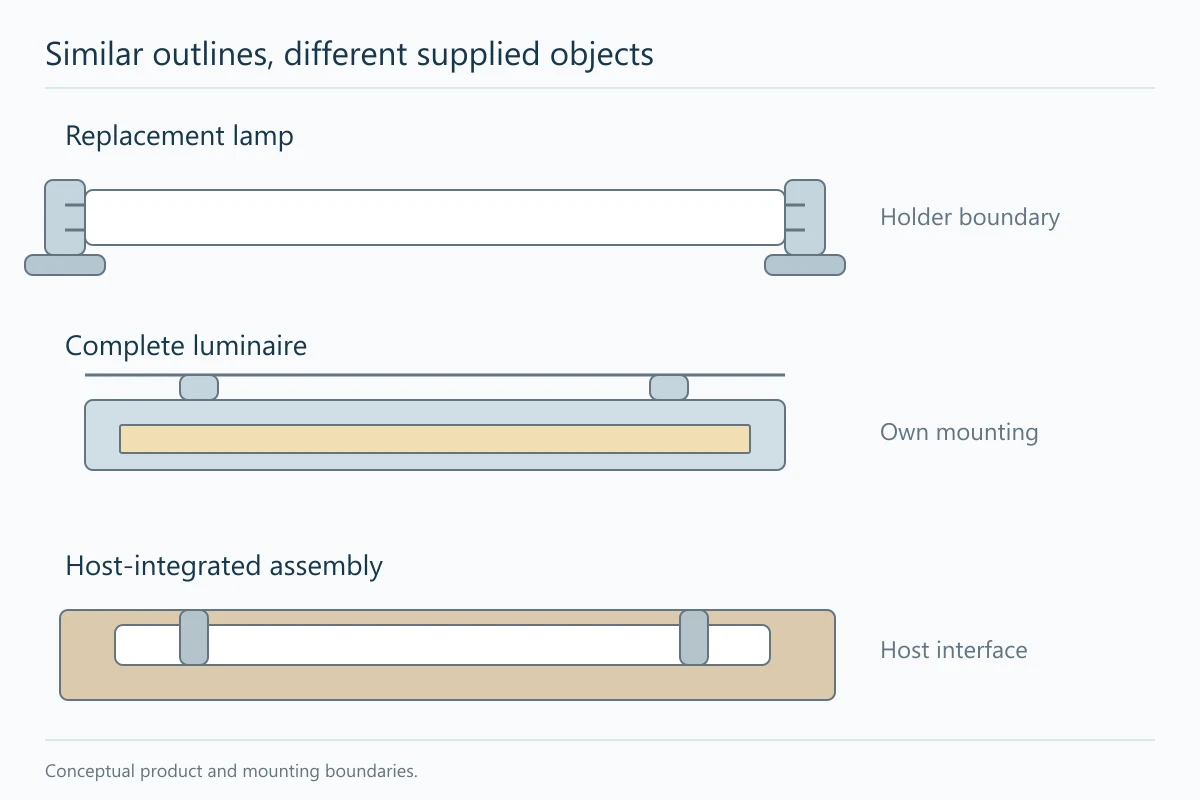
A replacement tube, a controlled luminaire and a custom module are different objects
Holders and a lamp-style product
A lamp for an identified holder arrangement is a different purchasing object from a complete controlled light. Some search results called tube lights are decorative or video-production products with their own mounting, equipment and controls.
A host-integrated or complete controlled assembly
A custom tubular assembly can instead be developed around furniture, equipment or another host. Its retention, end connection and service access belong to that integration. VST’s custom tube-light page describes that scope without making every color function a standard stocked option.
| Object | Physical and operating boundary | Relevant selection question |
|---|---|---|
| Replacement lamp | The identified holders and supported lamp system | Does this exact version provide the required function in that system? |
| Complete controlled luminaire | Its own intended mounting and operating equipment | Does the whole light suit the location and control brief? |
| Host-integrated tubular assembly | The host’s retention, connection and service arrangement | Which source/control function must the developed assembly provide? |
Color quality and useful output vary with the chosen setting
A white setting and the appearance of objects
White appearance, color rendering and the light reaching the task are related but distinct. A pleasing unlit diffuser or an attractive saturated scene cannot replace the information needed for a white-light work area.
Two sources can have a similar CCT while producing different spectral mixtures. The color of a wood sample or a fabric can therefore require a separate rendering judgment from the white appearance of the source itself. In a mixed task-and-accent design, keeping the white task source distinct can simplify that evaluation while the accent performs its own visual role.
Evaluate the intended source state beside the finishes and objects the application uses. Where a quantitative output or color-quality requirement matters, use the corresponding record. A value at one setting should retain that identity through the comparison.
The setting used in a comparison
For a fixed-white project, the tube size, output and CCT guide helps with the broader selection. A color-function comparison adds the question of what changes during use and whether the selected state still serves the task.
Choose the simplest function that fulfills the lighting brief
| Required result | Preferred starting direction | Keep with the choice |
|---|---|---|
| One suitable white appearance | Fixed or appropriately selectable white | The selected setting and adjustment method |
| Changing white independently of brightness | Supported tunable-white operation | The intended independent user controls |
| A distinct colored scene | An appropriate full-color system | The product object, control group and any separate white task |
If the room needs one white selected at fit-out, an appropriate fixed or selectable version may be enough. For changes during use, carry the required brightness and color behavior into the source-and-control specification.