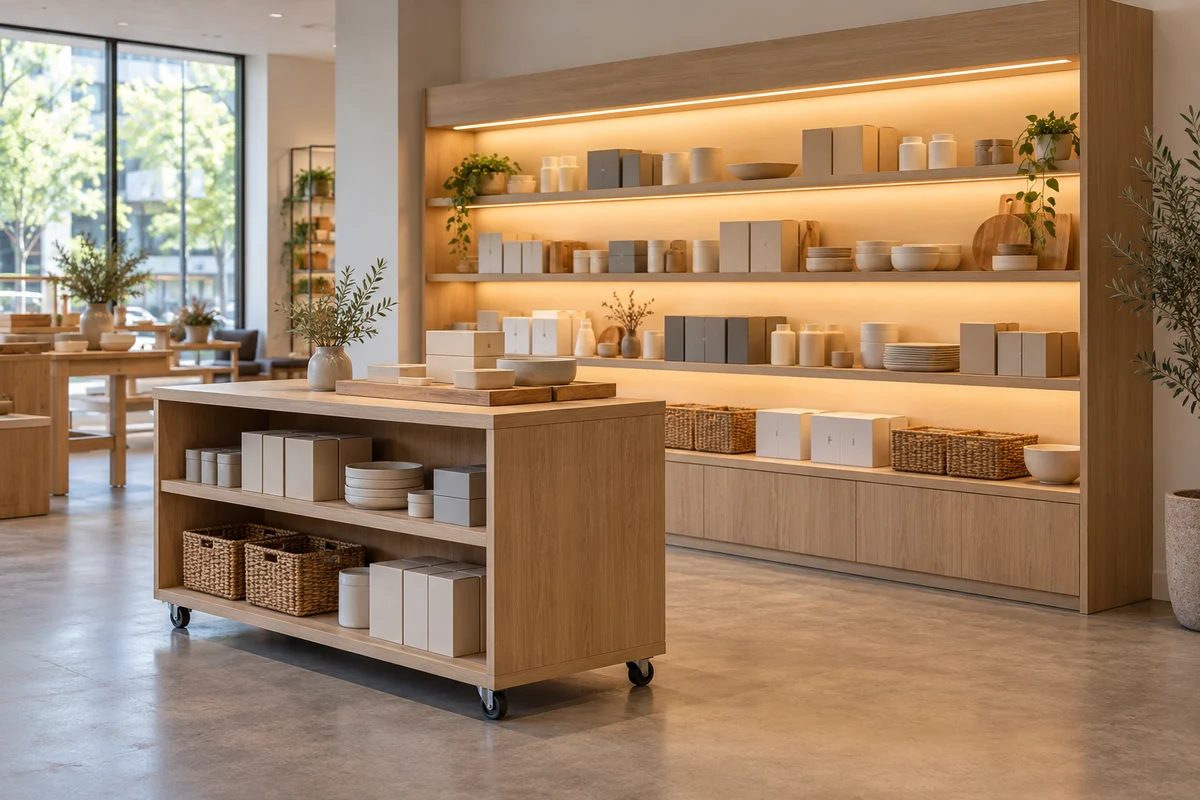
Start with the constraint inside the display fixture
The merchandise task
Custom lighting earns its place in a retail fixture when an available assembly cannot deliver a required result within the host’s practical limits. That result might be light on a recessed product face, a hidden source beside reflective packaging, or a replaceable light unit inside a shallow header.
Describe the result before choosing a new board or housing. A dim-looking shelf can reflect source position, shelf geometry, an unsuitable cover or the surrounding light. Commissioning a different LED board before understanding that relationship may leave the original problem in place.
The host-product boundary
Separate fixture development from lighting the whole shop. This decision concerns a display maker’s supplied host, its assembly work and its repeated use. Store layout, ambient lighting and merchandising still influence the appearance. General source selection is covered in the retail-display LED lighting guide; the question here is what must change inside your fixture program.
A standard light is enough when its interfaces fit
Catalog options can solve a specific need
A standard light bar is a good starting point when its finished dimensions, mounting, light distribution and supported supply arrangement suit the host. It can still be incorporated into a distinctive branded display. The surrounding structure and source position contribute much of what the shopper sees.
Compare the complete assembly with the host section. Look at end features, lead access and the surface the light actually reaches. If the source can sit behind the intended edge and the assembly remains accessible, a new construction may offer little functional benefit.
Read width, depth and overall length against the corresponding host references, rather than comparing a supplier’s board dimensions with a finished fixture opening. Covers, end features and mounting clips occupy space too. A nominally matching length leaves the insertion path unresolved when the bar must slide behind a fixed side panel.
An order option is different from development
A published length, finish or supported lead option may be an existing selection rather than a development task. Establish the available option’s actual scope. A different order code can be useful without requiring a new PCB, optic or tooling.
The simpler adequate route leaves your team with fewer unique parts to define and maintain. It still needs host-level evaluation. A catalog identity establishes what you are buying; your fixture geometry determines whether it serves this display.
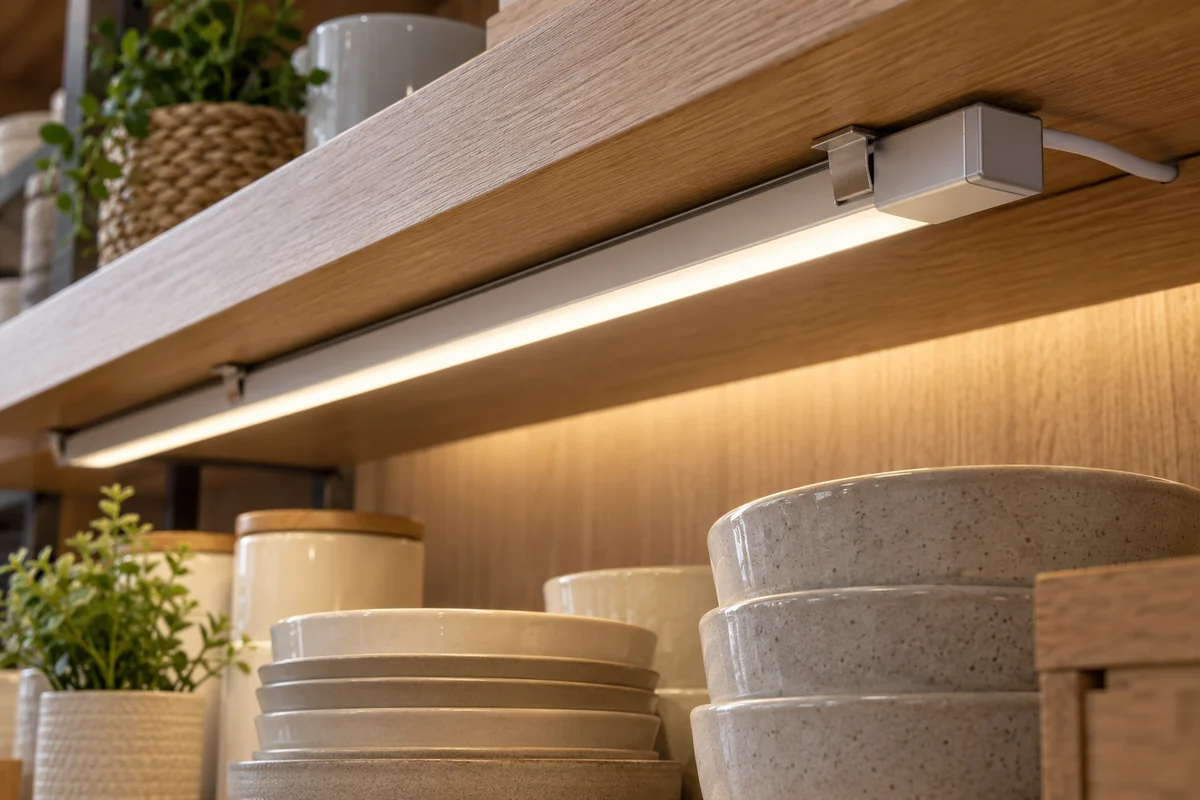
Geometry and source visibility can justify an adapted assembly
Occupied depth and finished edges
Customization becomes more relevant when the available assembly collides with a fixed bracket, projects beyond a branded edge or leaves no route for its connection. Separate a hard constraint from a change the fixture maker could make more easily. Moving a noncritical shelf detail may be simpler than creating a special lighting assembly.
Describe the finished section, including covers and mounting parts. A narrow board can still need a carrier or other supporting structure. Using only its width in the fixture drawing can understate the occupied space.
The source seen by the shopper
A source hidden from the front may appear from a side aisle or reflect in glossy packaging. An altered mounting angle, setback or shield may solve that issue while retaining the light engine. A new board is worth considering when the required source geometry itself changes and supported options cannot accommodate it.
| Host constraint | Start with | Adaptation worth investigating | New construction becomes relevant when |
|---|---|---|---|
| Source visible from a normal side view | Supported position or shield | Carrier orientation or cover arrangement | Required emitting geometry cannot fit the available assembly |
| Fixed bracket occupies an end space | Another supported assembly length | Permitted lead exit or mounting change | Board and carrier layout must change together |
| Fixture opening varies by model | Existing size family | Shared platform with documented variants | Models require materially different optical or mechanical arrangements |
Light distribution and materials define the visual benefit
Graphics and product faces need different arrangements
A backlit header and a shelf-front wash illuminate different objects. The header needs an appropriate source-to-panel arrangement; the shelf needs light reaching merchandise without being blocked by the fixture edge or stocked products. More total output can leave a shadowed target unchanged if the light cannot reach it.
Describe the target’s position, shape and surrounding obstructions when considering an adapted source. That gives the lighting designer something more useful than a request for extra brightness. Source placement or distribution may be the change that matters.
Reflective and diffusing surfaces
Glossy packaging can show a source reflection, while a diffusing face can reveal uneven spacing or insufficient mixing distance. A representative host mock-up helps evaluate these relationships. Keep source placement, viewing position and surrounding lighting comparable when reviewing alternatives; different camera exposure makes photographs unsuitable as brightness measurements.
The visible benefit should be stated specifically, such as lighting the rear product face or concealing the source from an identified view. Promising an attractive “premium effect” gives purchasing no clear way to compare a proposed change with a standard arrangement.

Power access and maintenance can outweigh a custom appearance
A practical power location
A display needs a supported power and control arrangement before an illuminated concept becomes practical. A fixed wall fixture and a movable promotional island can have different supply constraints. Record the available location and the host’s intended movement so cable routing can be considered alongside the light assembly.
If no suitable supply route exists, revisit whether the display should be illuminated at all, whether its position can change, or whether another supported system is available. Battery operation is a separate design choice involving duty, charging, servicing and applicable product requirements; it should not be assumed from the wish to avoid a cable.
Access to the replacement unit
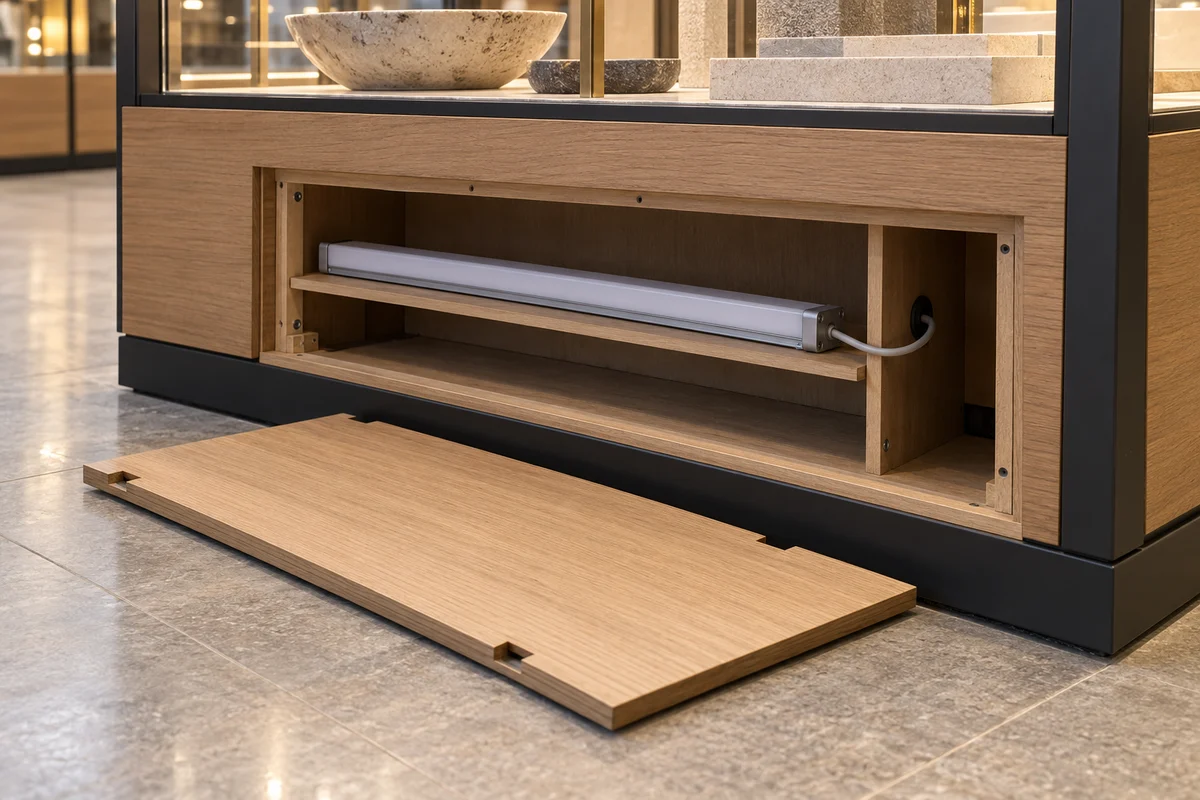
Consider what a service person actually reaches. Replacing a light bar through an accessible cover differs from dismantling fixed display panels. The connection and fasteners need an available service route as well as an installed position.
A custom-looking exterior can work with an ordinary replaceable assembly behind it. If the appearance requires a unique sealed unit, include that unit and its replacement implications in the decision. A general warranty duration alone does not explain who handles access labor, freight or damage to the host finish.
Repeat fixture families can share a lighting platform
Requirements that genuinely stay common
Look for repeated interfaces across the fixture family: the mounting section, supply/control arrangement, target surface and service direction. Shared requirements can support a common lighting platform even when the host’s outer graphics change.
Commonality has a practical purchasing benefit when it reduces the number of different parts that assemblers and service teams must identify. Describe the actual shared construction before claiming that all variants can use one module.
Differences that need separate parts
A wider header, changed shelf depth or reversed access direction can alter more than the outside dimension. It may require a different illuminated length, mounting carrier or light distribution. Similar-looking connectors also need their documented identity; appearance alone cannot establish interchangeability.
| Requirement | Potential common input | Variant difference to resolve | Effect on part identity |
|---|---|---|---|
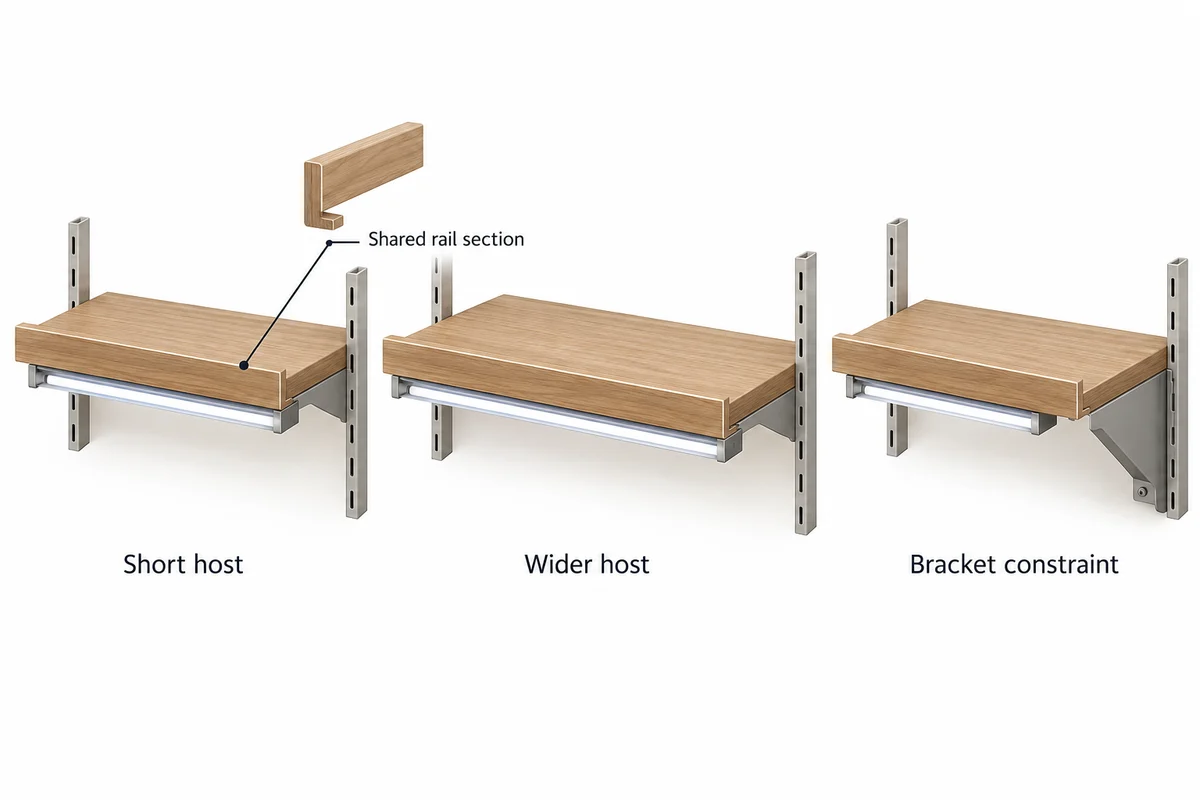
| Mounting | Same rail section | Different available length or bracket obstruction | Shared carrier concept, possibly separate finished lengths |
| Visual task | Same merchandise face | Deeper shelf or altered source setback | Reevaluate distribution before declaring the source common |
| Connection and service | Same documented host interface | Opposite access direction | Possible lead or assembly variant requiring its own identification |
Record common and variable features in the same family drawing. That makes a platform proposal reviewable without pretending a drawing establishes electrical or optical compatibility.
Part identification should follow the differences that matter in assembly. If two finished lengths share a source platform but require different carriers, purchasing and service still need to distinguish those assemblies. A common internal component can simplify supply while leaving more than one orderable replacement unit.
Separate development work from available options
Choose the smallest adequate change
Work outward from supported options. If a length selection solves the fit, review that selection before changing the PCB. If a carrier adjustment resolves the mounting conflict while the source arrangement remains suitable, focus development on the carrier and affected interfaces.
Changes can propagate. Shortening a board may alter source spacing; a different cover can change the visible light distribution; moving a connector can affect assembly access. The appropriate scope follows those relationships, rather than the label “light customization.”
Know what a new design buys
A new construction is justified when it supplies a required function or interface the simpler routes cannot deliver. Describe that gain in the development request and identify the evaluations it introduces. This keeps a distinctive-looking component from becoming a goal on its own.
VST’s custom LED light for host-product integration is relevant when the light and host boundaries need to be developed together. For a broader comparison of module supply routes, see custom versus standard LED modules.
Compare the additional work against the rollout need
Development and assembly have different cost drivers
Separate one-time design or tooling work from repeated assembly work and later replacement. A special carrier might simplify installation across a recurring fixture order, yet add an unnecessary unique part to a short promotion. The relevant comparison depends on the actual order program and available alternatives.
Describe the assembly task that would change: aligning a source, locating a bracket, managing leads or identifying variants. A cost claim needs quantities and rates from the parties performing that work. An illustration of a cleaner assembly cannot establish a labor saving by itself.
Short programs and repeated production
For a short campaign, available components and a modest host adjustment may be preferable to a newly developed source, provided the result remains adequate. Repeated production can make a documented platform or purpose-built assembly more useful when the same constraint recurs.
Include likely reorder variation and replacement needs when comparing those routes. Where quotations need normalization, the separate LED assembly cost-comparison guide explains how to put them on the same basis. There is no universal order quantity at which customization becomes worthwhile.
Assign responsibility for a failed interface before the rollout: who supplies the light assembly, who integrates it into the host, and who handles an installed replacement. These responsibilities can sit with different businesses. A custom component’s warranty should be read alongside the fixture maker’s service obligation so the program does not assume that a replacement component includes work on the display itself.
Work through a retail-fixture decision
Map one fixture family
Assume an illustrative indoor display family with a shallow wall shelf, a wider wall shelf and a movable island. These are hypothetical host requirements, not a VST project. The wall shelves share a rail section and an available rear supply location. The wider version needs a different illuminated span. The island has no defined supply route.
Begin with supported complete light bars for the wall shelves. Review the two spans as finished assemblies, including the ends and service access. Keep the source hidden behind the rail while checking the merchandise face from front and side viewing positions.
| Fixture need | Initial scope decision | Reason | Condition that could change it |
|---|---|---|---|
| Shallow wall shelf | Evaluate a standard assembly | No unique interface has yet been identified | Fit or visual evaluation shows an unmet requirement |
| Wider wall shelf | Investigate a supported length or platform variant | The mounting concept repeats, but the span changes | Available lengths or distribution cannot serve the target |
| Movable island | Hold lighting construction selection | The power and operating arrangement remains undefined | An appropriate supported supply route is established |
Select the justified level of customization
The initial result is a mixed program, not a commitment to make every source unique. A new assembly remains an option if the documented host constraint defeats supported alternatives. The island’s appearance can continue to develop while its lighting decision stays open.
Use this reasoning to name the exact constraint your retail fixture needs to solve. Customization is worth pursuing when the added development addresses that constraint and its supply consequences suit the program. Where ordinary parts do the job, retaining them is a valid design decision.