Custom Toy Car LED Lights for OEM & RC Vehicle Manufacturers
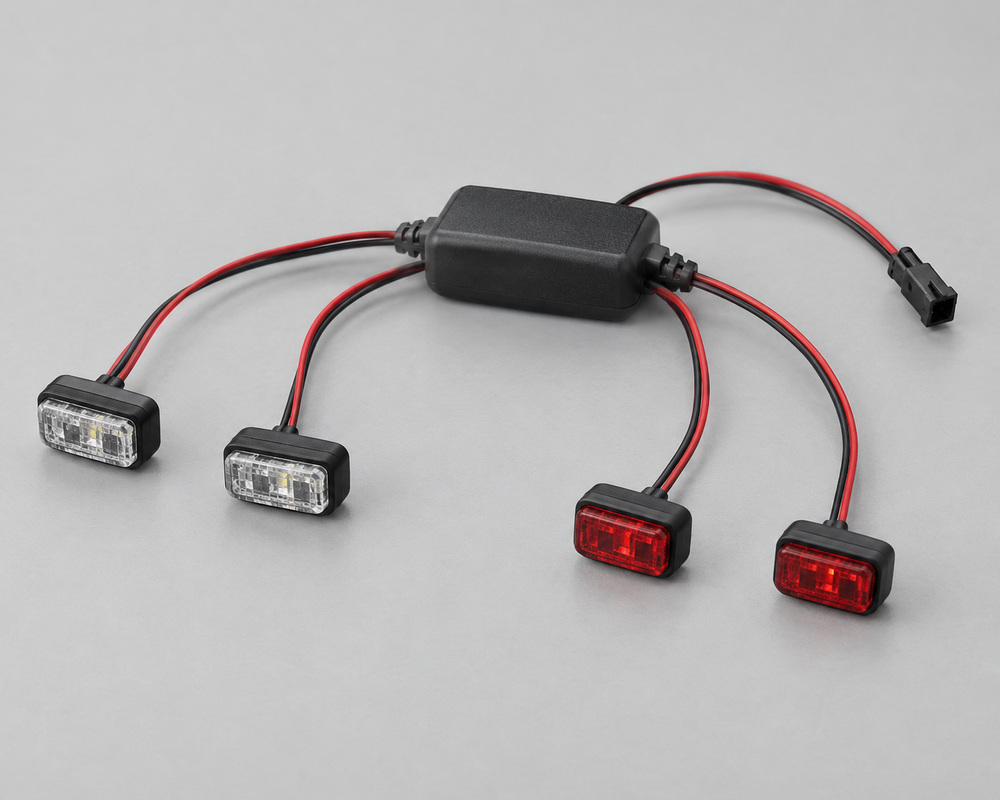
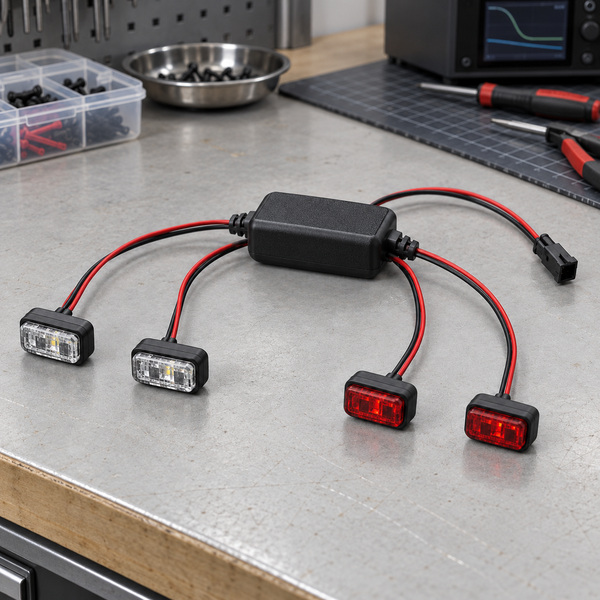
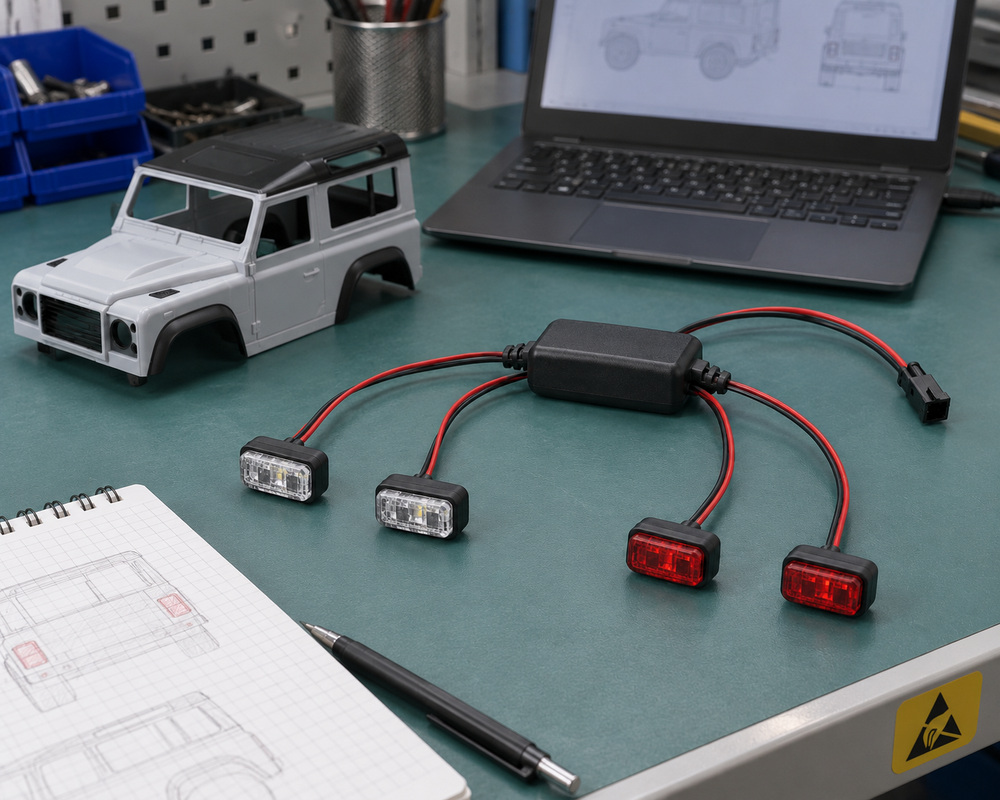
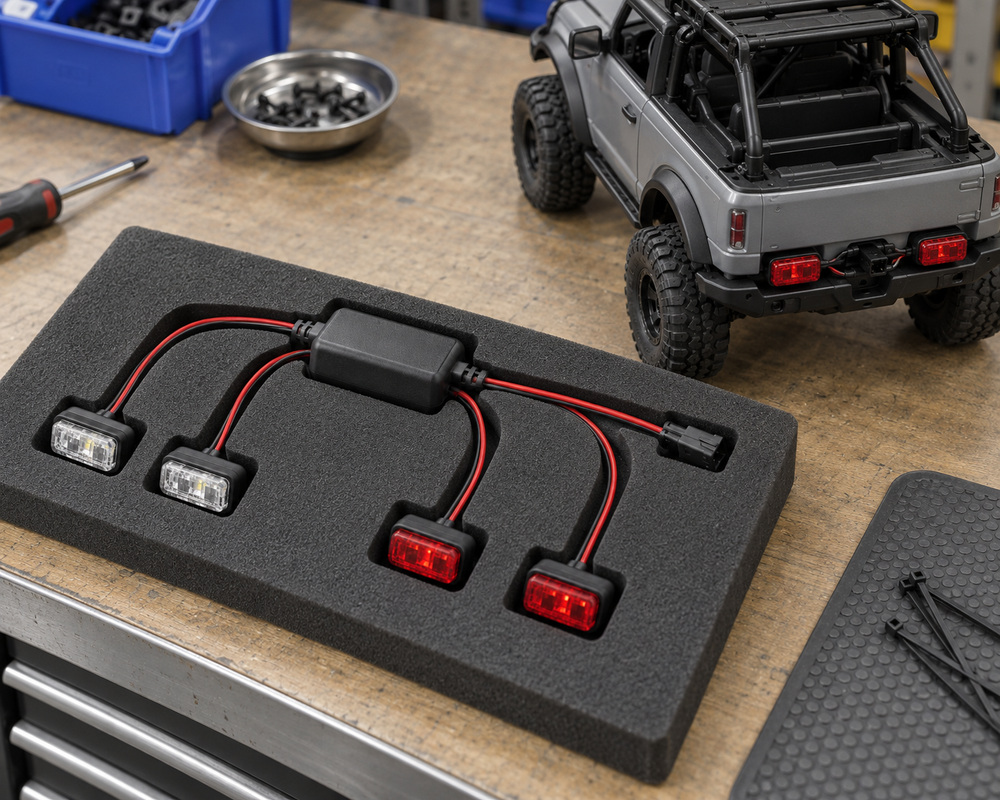
VST Lighting develops and manufactures custom toy car LED lights for RC vehicle brands, toy manufacturers and scale-model producers. Our OEM toy lighting solutions include miniature LED headlights, tail lights, compact light pods and customized wiring harnesses designed around the vehicle body and electrical system.
From simple front and rear lighting to controller-compatible LED effects, we support lamp housing customization, low-voltage electrical integration, prototype testing and repeat production. Each lighting assembly is evaluated for available mounting space, connector compatibility and the intended vehicle operating conditions.
Custom miniature LED headlights, tail lights and light pods for toy vehicles
OEM prototype development, electrical evaluation and bulk manufacturing support
LED wiring harnesses, connectors and lighting functions adapted to the vehicle design
Share your vehicle model, body dimensions, power supply, desired lighting effects and estimated order quantity for engineering review.
Custom LED Lighting for RC Cars and Toy Vehicles
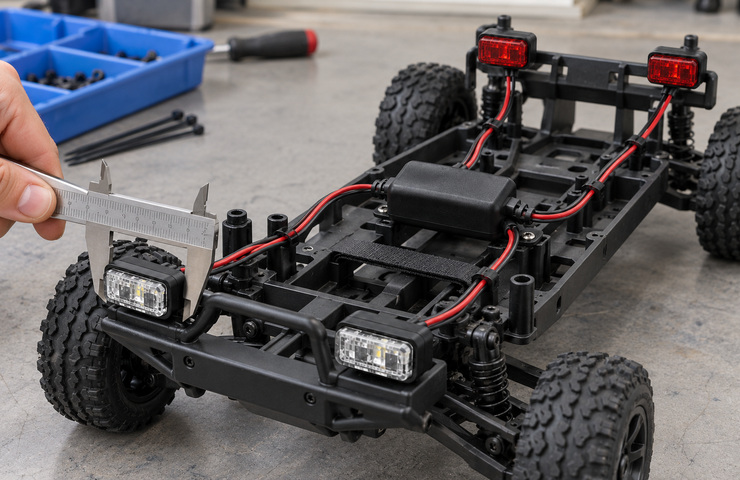
Different toy vehicles require different LED lighting designs. RC cars need compact headlights and secure wiring that can tolerate normal vehicle movement, while battery-powered toy cars may need protected rear lamps and simple electrical connections. Scale-model display cars prioritize miniature lighting appearance and concealed wiring. VST develops toy car LED lighting assemblies around the available body space, power system and required lighting functions.
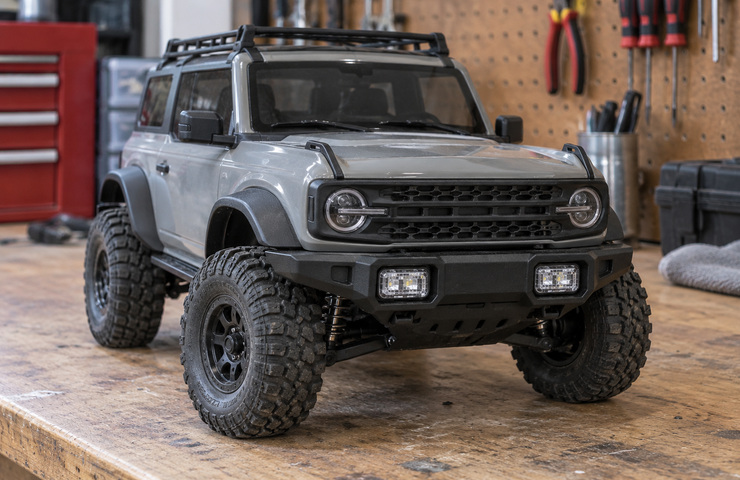
RC Car LED Headlights and Lighting
Operating environment
Removable body over a moving chassis
Buyer requirement
Keep frontal lamps visible while the shell remains easy to remove.
Design constraint
Wheel travel and body clips limit cable paths.
Design direction
Seat enclosed pods in bumper openings and route the harness above moving parts.
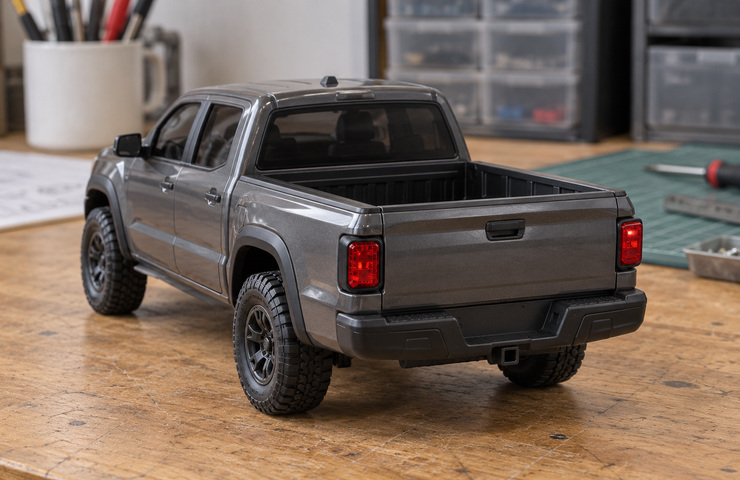
LED Tail Lights for Battery-Powered Toy Cars
Operating environment
Closed molded body with repeated handling
Buyer requirement
Integrate red rear lamps into the body without loose external components.
Design constraint
Thin tail sections leave little space for retention hardware.
Design direction
Use a compact rear pod and protected internal connections appropriate to the shell.
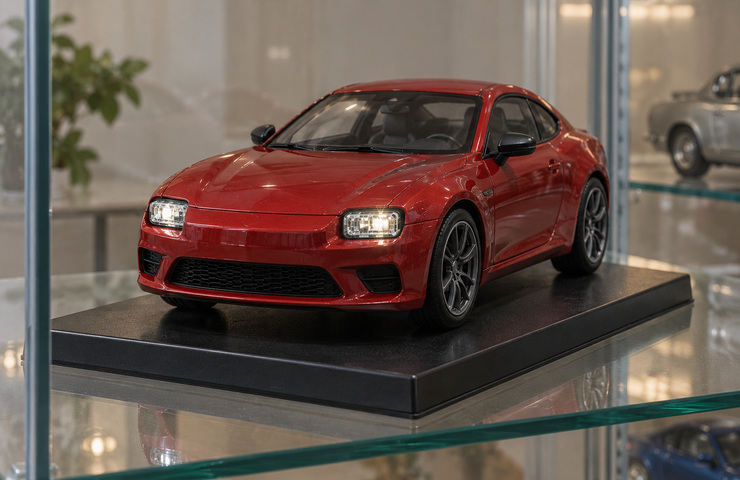
LED Lighting for Scale Model Cars
Operating environment
Stationary model within a display cabinet
Buyer requirement
Create controlled front-lamp appearance without distracting glare.
Design constraint
A hidden power entry must coexist with the display base.
Design direction
Place the controller beneath the body and route its feed through the base.
Avoid Common Toy Car LED Lighting Problems
Lights dim when the motor starts
Purchasing risk: Shared power can make lighting behavior vary with driving load.
Confirm: Host supply behavior during acceleration
VST solution direction: Check the lamp input against motor startup loads and specify the permitted supply conditions.
Similar connectors have different polarity
Purchasing risk: An apparently matching plug can cause damaged electronics or assembly rework.
Confirm: Existing connector pin assignment
VST solution direction: VST checks connector fit and pin functions before proposing a compatible connection.
Front lamps vary between production batches
Purchasing risk: Visible color differences can make otherwise matching vehicles look inconsistent.
Confirm: Approved front/rear appearance reference and permitted color variation
VST solution direction: VST can specify emitter selection and appearance checks for the production assembly.
VST supports OEM toy car LED lighting customization across miniature lamp housings, LED placement, wiring harnesses and electrical control interfaces. Depending on the vehicle design, specifications may include headlight and tail light dimensions, SMD LED selection, lens appearance, operating voltage, connector type, cable length and lighting behavior. Each option is assessed against the vehicle’s mounting space, power supply and assembly requirements.
Lamp shape and retention
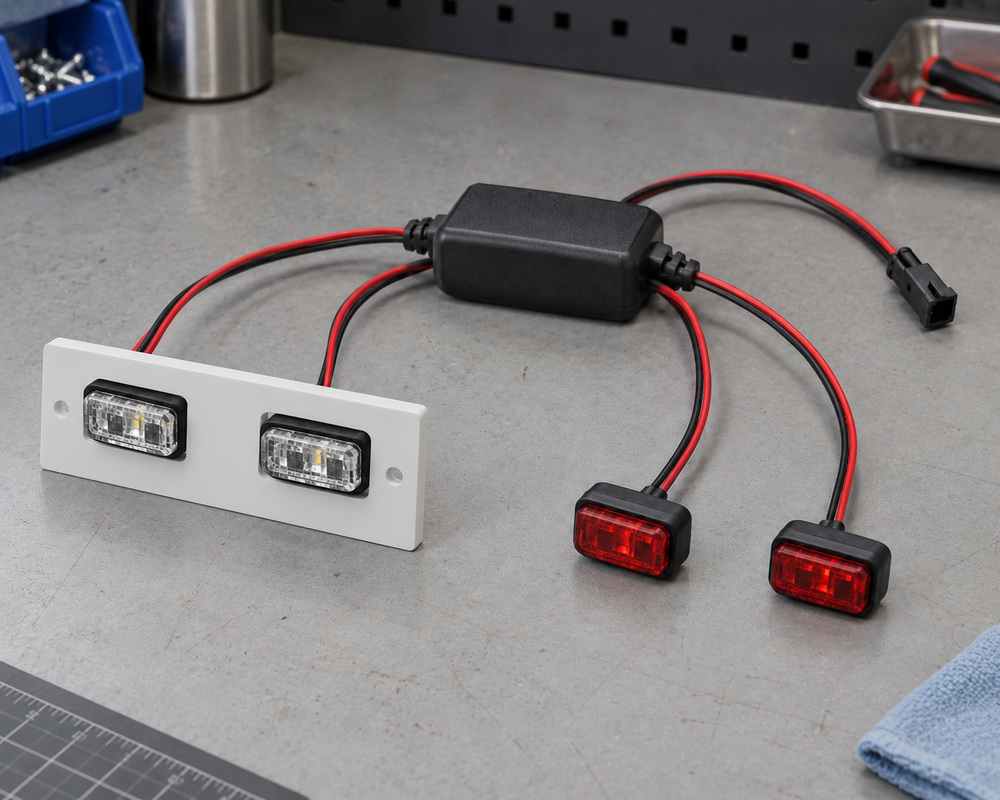
Miniature LED headlights and tail lights must fit the available openings in the toy car body without interfering with clips, fasteners or moving components. VST can evaluate custom LED light pods, lens seating, compact PCB arrangements and suitable fixing methods. Existing molded body parts may be reused where practical, while new lamp housings or mounting features may require additional tooling and prototype evaluation.
Buyer input: Body-wall thickness at the lamp mounting points
Harness branches and connections
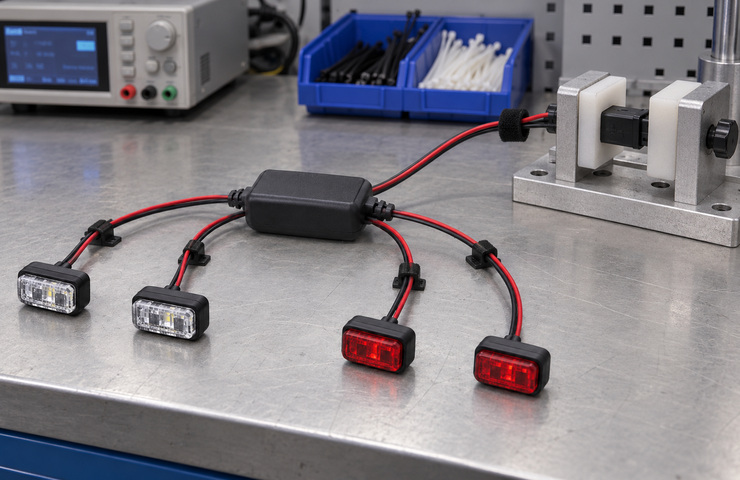
A custom toy car LED wiring harness connects the lighting modules to the intended power and control interfaces. VST can develop cable lengths, branch positions, connector types and detachable body connections around the vehicle assembly sequence. Wire routing should avoid moving chassis parts, sharp edges and areas where the body may pinch the harness. Connector polarity, retention and strain relief must be verified before production.
Buyer input: Preferred detachable points within the body
Lighting functions and control
Toy car LED lighting can be developed for steady headlights, rear lamps or project-specific lighting effects. Where required, functions such as flashing, braking or synchronized lighting may be evaluated using a compatible controller and vehicle electronics. VST reviews the available supply voltage, current, signal interface and required operating behavior before defining a suitable LED circuit or control arrangement.
Buyer input: Required behavior when the vehicle changes operating mode
Light appearance
Miniature LED selection, lens design and operating current influence the brightness, color and visible appearance of toy car headlights and tail lights. VST evaluates front and rear lighting together to support consistent appearance across the vehicle model. Depending on the project, optical checks may include luminous output, color characteristics and visual comparison against an approved reference sample.
Buyer input: Required front/rear appearance and the reference sample for approval
Independent vs. Controller-Based Toy Car LED Lighting
Toy car LED lights can operate through a separate lighting circuit or integrate with the vehicle’s existing electronic controller. Independent lighting is often simpler when steady headlights and tail lights are sufficient, while host-controlled systems may support synchronized lighting effects when compatible control signals are available. VST evaluates the electrical interface, wiring space and required lighting functions before recommending the appropriate assembly design.
Decision factor
Independent light assembly
Host-controlled assembly
Buyer guidance
Function behavior
Steady or locally selected lamp operation
Functions follow an agreed host control signal
Use host control only when synchronized effects are part of the product.
Electrical boundary
Defined power input to a separate lamp circuit
Power and signal interfaces both require integration
Identify signal compatibility before committing to a controller architecture.
Assembly burden
Fewer signal connections within the body
Extra control connection and routing space
Choose the simpler circuit when independent lighting satisfies the intended use.
Change implications
Lamp revisions primarily affect the harness
Host firmware or control changes may affect lamps
Keep the lighting interface stable if vehicle electronics will change.
VST supports custom toy car LED light development from initial vehicle drawings and electrical requirements through lamp design, wiring harness assembly, sample testing and production preparation. Our engineering process coordinates miniature LED modules, body mounting points, connector interfaces and required lighting functions. Prototype evaluation helps identify fit, electrical and visual issues before the accepted assembly configuration is released for repeat manufacturing.
01
Map the vehicle interfaces
Customer input: Body openings and available mounting space (mm)
VST work: Map lamp positions, accessible mounting surfaces, and the power interface against the intended vehicle assembly.
Stage output: A lamp-and-harness proposal showing the vehicle connections.
02
Build the fit mock-up
Customer input: Choice of body retention approach
VST work: Check lens seating and access to fixings in the proposed body opening or a suitable mock-up.
Stage output: Mounting adjustments that preserve body assembly and lamp appearance.
03
Assemble the harness
Customer input: Vehicle wiring layout and required connector pinout
VST work: Assemble the light pods, wire branches, and protected connections into a functional sample.
Stage output: A working lighting sample with the specified plugs.
04
Record the production design
Customer input: Accepted configuration and change list
VST work: Record the agreed lamp design and the assembly checks needed for repeat production.
Stage output: Lighting assembly details and production inspection points.
Toy Car LED Lighting Testing and Quality Verification
VST evaluates custom toy car LED lighting assemblies against agreed optical, electrical, thermal and mechanical requirements. Depending on the project, testing may include luminous output and color measurements, operating voltage and current, motor-start load response, controller temperature, body fit and connector retention. Sample checks help confirm that the miniature headlights, tail lights and wiring harness function together under the specified vehicle operating conditions. Results apply to the tested configuration and agreed acceptance criteria.
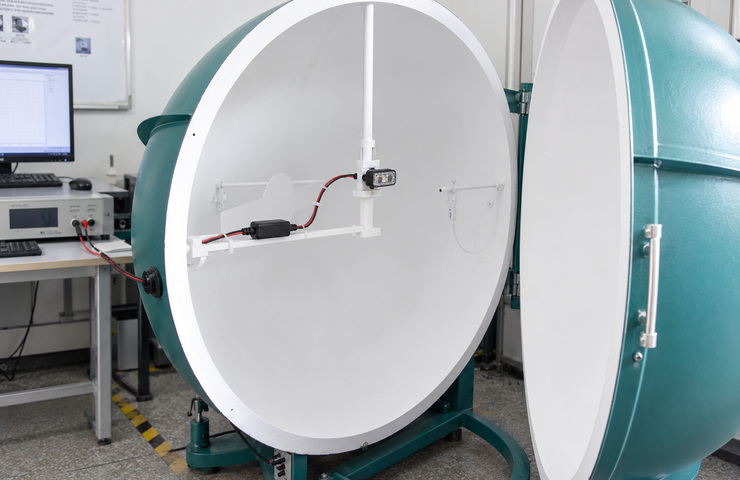
Luminous and color measurement
Purpose: Check source appearance before committing to lens and emitter selections.
Method: Use integrating-sphere measurement for the selected light assembly at its defined electrical operating condition.
Acceptance criteria: Front and rear color characteristics match the intended lamp appearance.
Evidence: Results depend on the sample configuration and the tests arranged for it.
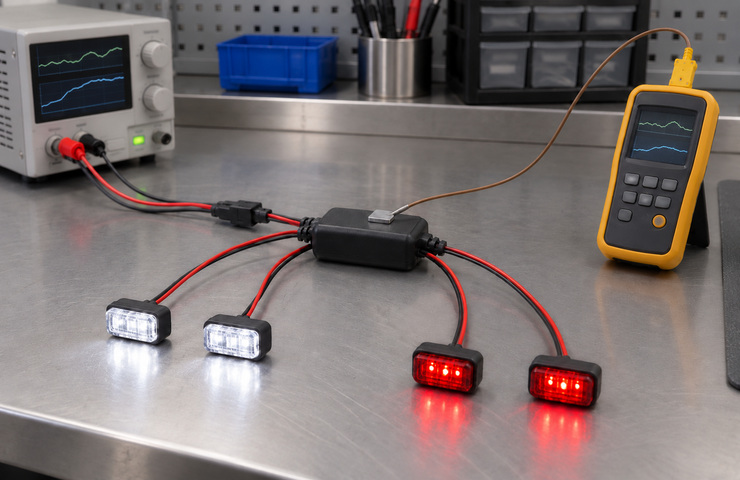
Controller surface temperature
Purpose: Identify heat buildup that could affect nearby polymer parts.
Method: Operate the connected assembly and measure relevant controller or lamp-contact temperatures using suitable contact probes.
Acceptance criteria: Temperatures remain within component and host-material limits under the specified operating conditions.
Evidence: A thermal record may be arranged once the project test conditions are specified.
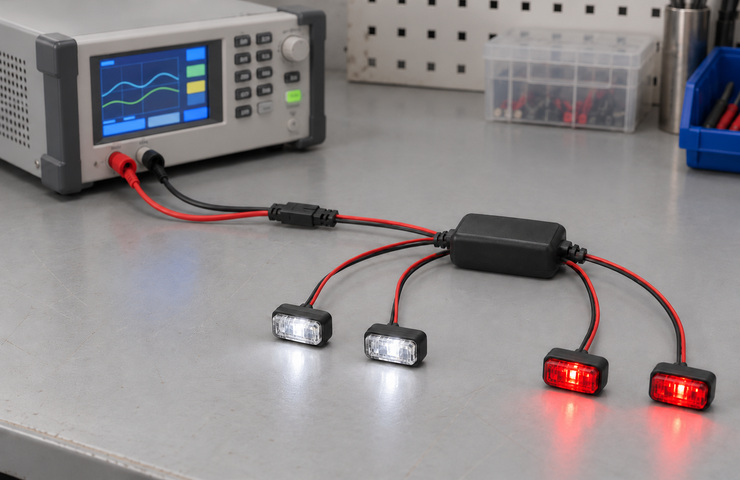
Input current and vehicle-load response
Purpose: Check whether motor startup and driving-load changes cause unacceptable lamp dimming or function changes.
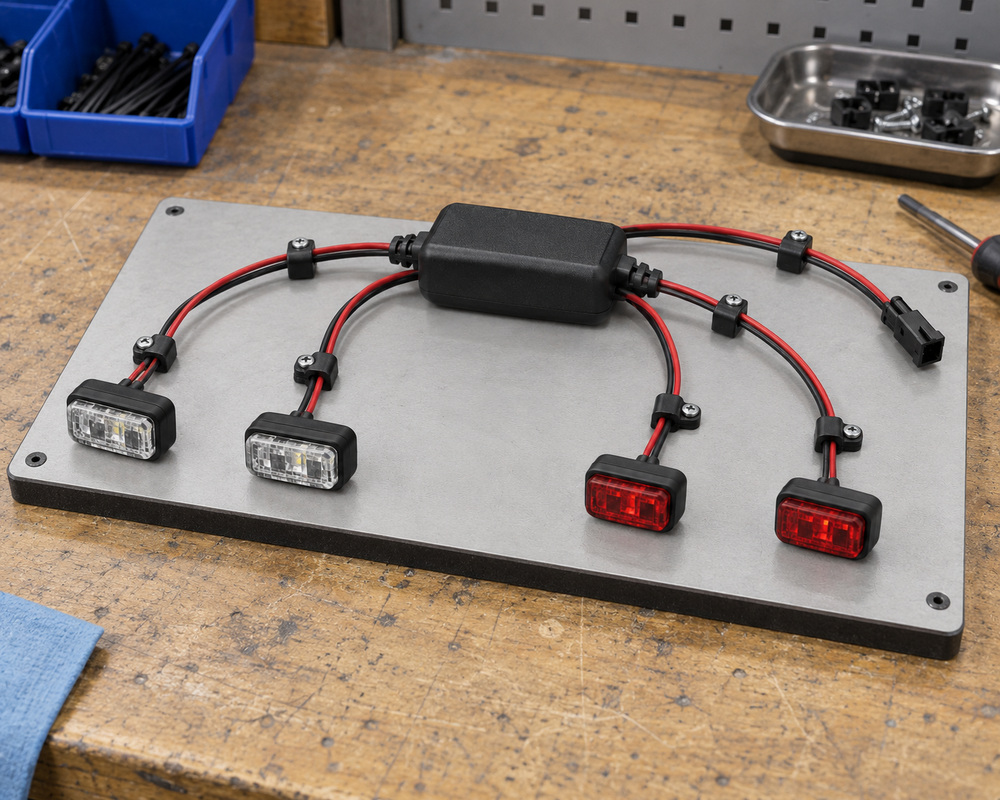
Method: Check input current and lamp behavior with the specified vehicle power system, including motor startup and agreed changes in driving load. Initial bench wiring checks can precede the vehicle evaluation.
Acceptance criteria: Lamp behavior remains within the agreed limits across the specified vehicle operating conditions. Record the supply voltage and current during motor startup and the selected load changes.
Evidence: The image shows preliminary bench wiring only. Vehicle-evaluation records must identify the power system, motor-start sequence, loads, lamp limits, and observations; no completed startup result is supplied.
Body fit and cable clearance
Purpose: Avoid pinched wires and interference during body closure.
Method: Inspect the mounted lamps and route the harness through the proposed chassis with the body fixing points accessible.
Acceptance criteria: The shell closes without loading leads or obstructing moving parts.
Evidence: Fit findings apply to the body used in the check.
Connector retention and routing
Purpose: Reduce accidental disconnection during handling or shell removal.
Method: Inspect mating engagement and cable support with the unpowered assembly in its intended routing position.
Acceptance criteria: Connections remain seated and wire support prevents stress on lamp exits.
Evidence: Retention criteria depend on the plug and harness specified.
Lighting assembly documents
Document the lamp positions, wiring, and electrical connections for the vehicle model being developed.
Electrical interface specification
Project Specific
The lamp specification identifies pin functions, supply requirements, and control behavior.
Assembly and inspection details
Project Specific
Assembly details show lamp positions, harness routes, and repeat-production inspection points.
We separated the lamp openings from the control functions in the first discussion. That helped us decide which body parts needed changing and which electronics belonged outside the lighting job.
Toy Product CompanyProduct Manager · Germany
Lamp-to-body scope definition
The harness layout showed which connections came away with the shell and which stayed on the chassis. Our team could use it to settle the assembly sequence.
Scale Vehicle CompanyR&D Engineer · United States
Detachable body connection planning
Discussing the front and rear lamps together helped us choose the lens treatment and emitters for the look of the vehicle.
General module guidance uses starting quantities of 500 units per model for light customization and 1,000 for high customization. Applicability to your toy-lighting assembly needs a project decision. The quotation must state the final MOQ, model, and development work, including any new pods, control circuits, or harness fixtures.
Sampling support
Toy-lighting samples may carry processing costs and, where needed, mold or tooling charges. Confirm the applicable charges before accepting development. Any repayment of eligible sample spending or credit against a later production order requires written terms specifying the amount, qualifying order, and settlement method.
Lead-time factors
For planning only, the general light-customization ranges are 15 to 25 working days for samples and 20 to 30 for bulk production. High-customization ranges are 30 to 50 for samples and 25 to 35 for bulk. Applicability to this vehicle model and any additional evaluation time must be agreed. Timing starts after complete technical inputs and fulfillment of applicable sample fees, tooling fees, deposits, and other order conditions. Material reservation may shorten later work; delivery is not guaranteed.
Tooling / NRE
New pod molds, harness fixtures, or controller resources may incur tooling or NRE costs. Whether any mold or tooling charge can offset later production payments is decided for the toy-lighting order. Record the eligible amount, the qualifying production order, and the method for applying the credit before development starts.
Supply stability
For repeat vehicle programs, VST can coordinate agreed material forecasts and production checks for the approved lighting assembly. Finished-kit availability is confirmed for each order.
Packaging & logistics
Packaging can include custom labels, carton marks, barcodes, brand artwork, instruction sheets, and user manuals. Protective packing should protect the pods, lenses, and keyed plugs and keep each model identifiable. Shipment coordination can be agreed for the order. Packing quantities, freight costs, and transit times require a project quotation.
These questions cover shared designs, quotation contents, and product-level assessment. For toy car LED lights with an unusual body layout or an undecided control function, discuss the specific issue with VST. The proposal can then identify the lamp connections and any changes needed to the existing vehicle electronics.
Are toy car LED lights a universal replacement kit?+
No. VST develops custom toy car LED lights for specified vehicle designs rather than assuming universal fitment. Compatibility depends on the body openings, available voltage, electrical connections, mounting dimensions and lighting functions. An LED assembly designed for one RC car or toy vehicle may require changes before it can be used in another model.
What is included when I ask for a lighting quotation?+
The quotation should state which parts are included.
Item
Scope decision
Light pods and harness
Specify the supplied assembly
Controller
Include the agreed functions
Vehicle, battery, receiver
Separate host equipment unless expressly included
Can toy car LED lights serve several body styles?+
Each body must retain suitable mounting points, cable routes, and lamp positions. Shared emitters or plugs can simplify the parts list, although different openings may need separate mechanical parts. Check the interfaces on each shell before reusing a design.
Does the lighting set establish toy safety compliance?+
Compliance of the complete toy requires assessment of its final construction and intended use, including materials, accessible parts, and electrical integration. A lighting-component description provides only part of that information. Discuss the evidence required for your product before specifying a compliance claim.
What should I include in an RFQ for toy car LED lights?+
Provide requirements from your vehicle data or a sample. Identify items still undecided instead of filling them with assumed values.
Specification
Information to provide
Power and load changes
Supply type and range (V), available current (mA or A), motor-start behavior, and driving-load changes
Lighting functions
Steady or controlled functions, required state changes, and permitted dimming or interruption
Installation space
Lamp and controller space, fixing positions, and wire routes in mm
Connectors
Mating part, pinout, polarity, and detachable-body connections
Appearance acceptance
Front/rear reference sample, viewing conditions, and permitted color variation
Complete-product assessment
Intended user group, target market and the party responsible for complete-product assessment