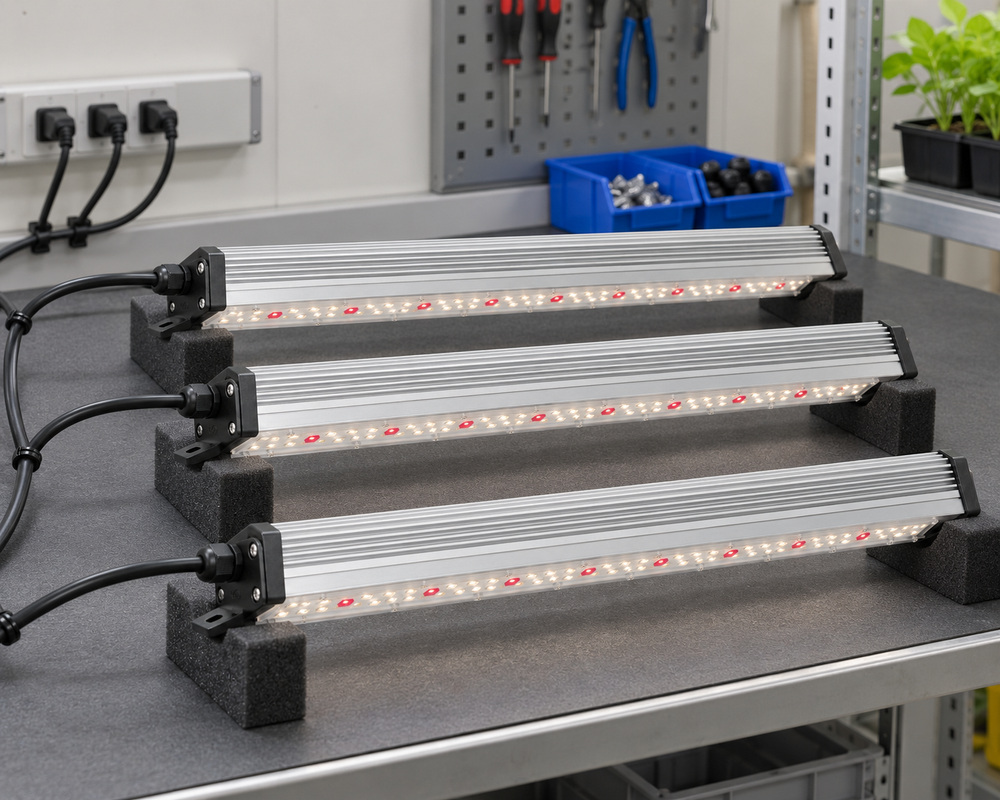
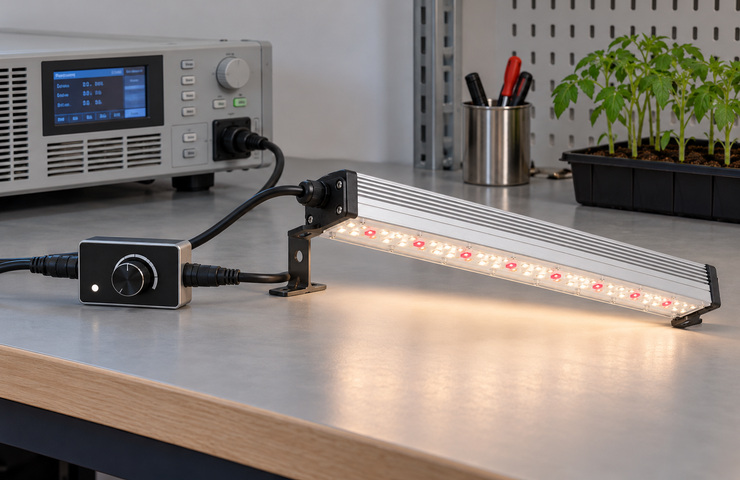
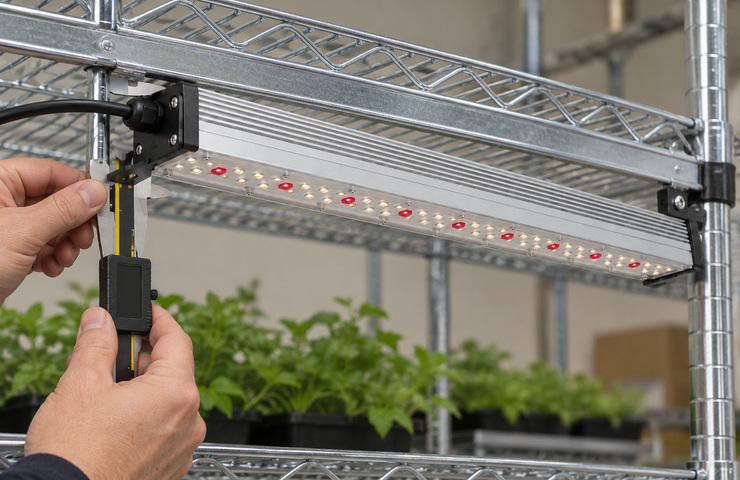
Custom LED grow lights for OEM development projects
VST can assess the feasibility of a custom LED assembly for your cultivation layout. Define the source targets, mounting, controls and evaluation responsibilities before sample development. Fixture measurements and cultivation trials address separate questions.
Align the proposed source layout with the usable canopy area.
Treat spectral targets separately from crop-growth and yield evidence.
Keep driver placement and humid-area interfaces explicit before developing samples.
Tell us the crop area and mounting concept; mention which spectrum or control decisions remain open.
Fit custom LED grow lights to cultivation geometry
Custom grow lights need to suit the rack, bench or equipment where they will operate. Define the electrical requirements and humid-area protection for that environment. A generic fixture image cannot establish the protection needed.
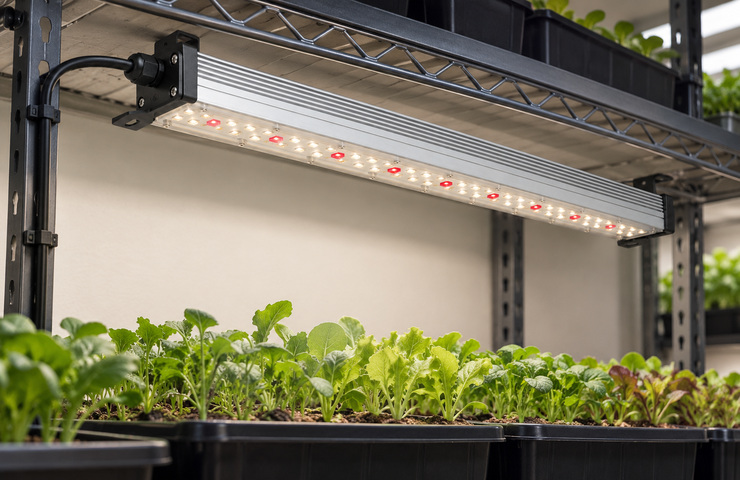
Indoor cultivation racks
Operating environment
Shelved growing area with restricted vertical space.
Buyer requirement
Illuminate the usable tray area without blocking crop handling.
Design constraint
The rack determines mounting space and distance to plants.
Design direction
Discuss compact covered bars with an accessible service route.
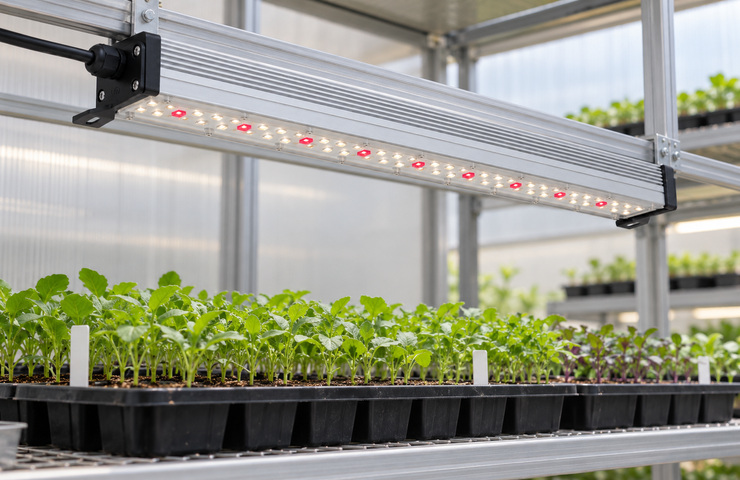
Propagation benches
Operating environment
Indoor trays where plants and equipment need regular access.
Buyer requirement
Locate light above the working cultivation area.
Design constraint
Mounting hardware must avoid obstructing tray movement.
Design direction
Assess fixture placement and bench access against the proposed cultivation layout.
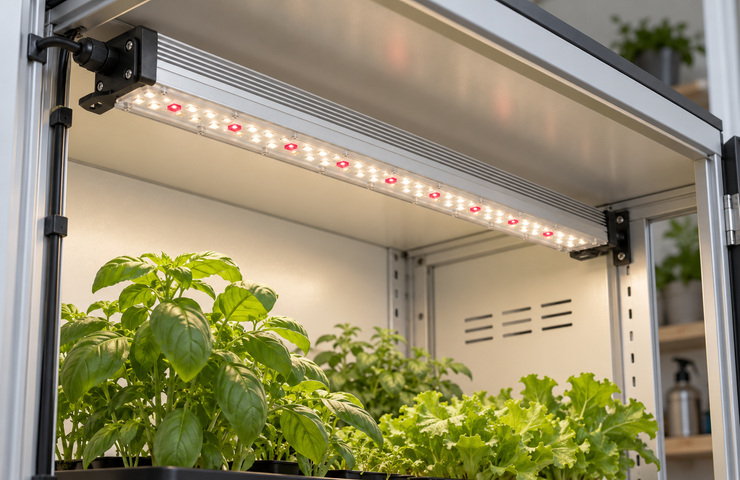
Cultivation equipment integration
Operating environment
A growing cabinet or module with managed internal conditions.
Buyer requirement
Coordinate the LED assembly with equipment controls and ventilation.
Design constraint
Condensation exposure can differ from open-room conditions.
Design direction
Evaluate protection and connection requirements for the defined equipment enclosure.
Remove cultivation setup risks
Advertised power obscures usable canopy coverage
Purchasing risk: A suitable electrical input does not establish light distribution at plant level.
Confirm: Required canopy measurement plane.
VST solution direction: Define a quantum-sensor grid for the proposed installation geometry.
Spectrum goals change after hardware selection
Purchasing risk: Unresolved spectral requirements can force another source-board iteration.
Confirm: Crop stage and intended spectral strategy.
VST solution direction: Identify the channel architecture before committing to a board layout.
A humid enclosure is treated as a dry room
Purchasing risk: Wrong connection assumptions can create avoidable integration and reliability issues.
Confirm: Condensation exposure and cleaning practice.
VST solution direction: Agree the complete fixture, cable entry and mated connector as the evaluation specimen. Keep environmental checks separate from optical performance measurements.
Configure the source without assuming a crop result
Custom LED grow lights may require changes to source layout, channels, mounting or controls. These are options to assess for your project. Spectrum, output and biological performance need applicable evidence before they become model-specific claims.
Source and spectral architecture
Discuss white and supplemental spectral channels as source options. Independent channels change the board and driver design. Define the source targets before sample development and assess crop response separately from fixture measurements.
Buyer input: Channel-control need and the intended spectral objective.
Bar layout and mounting
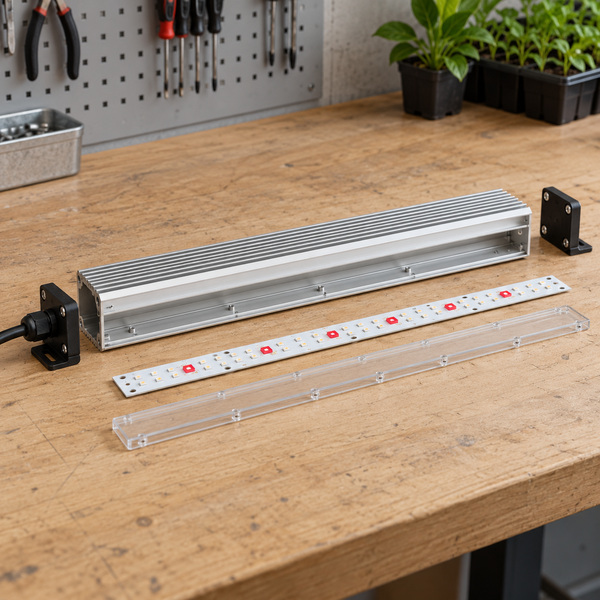
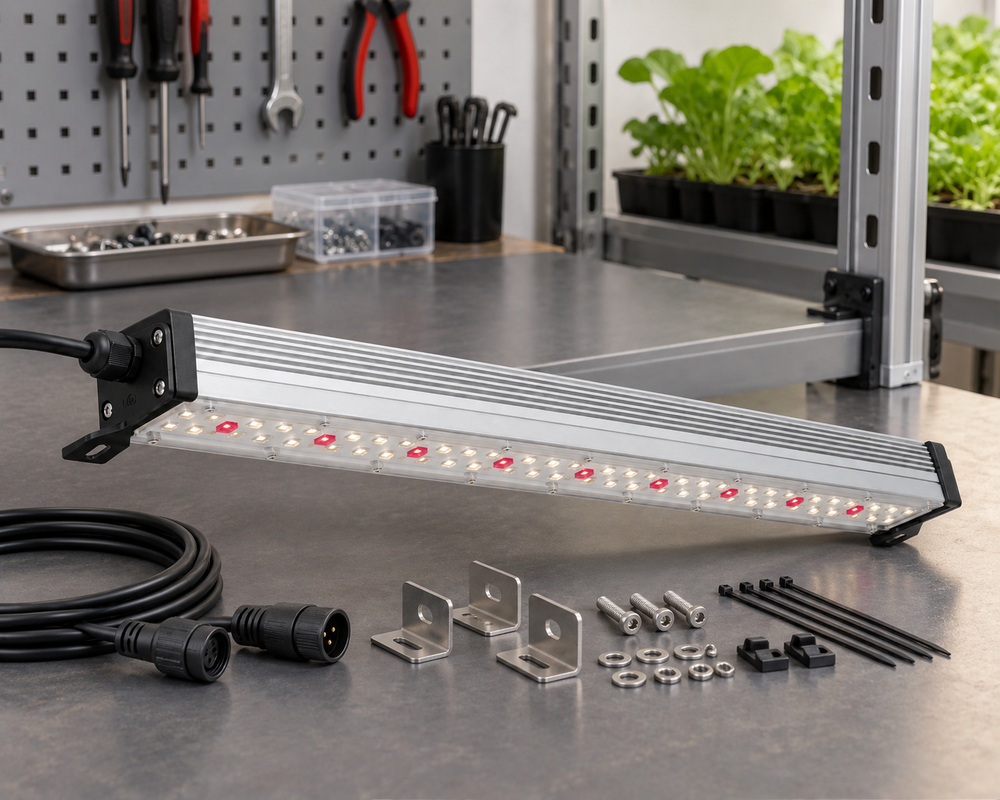
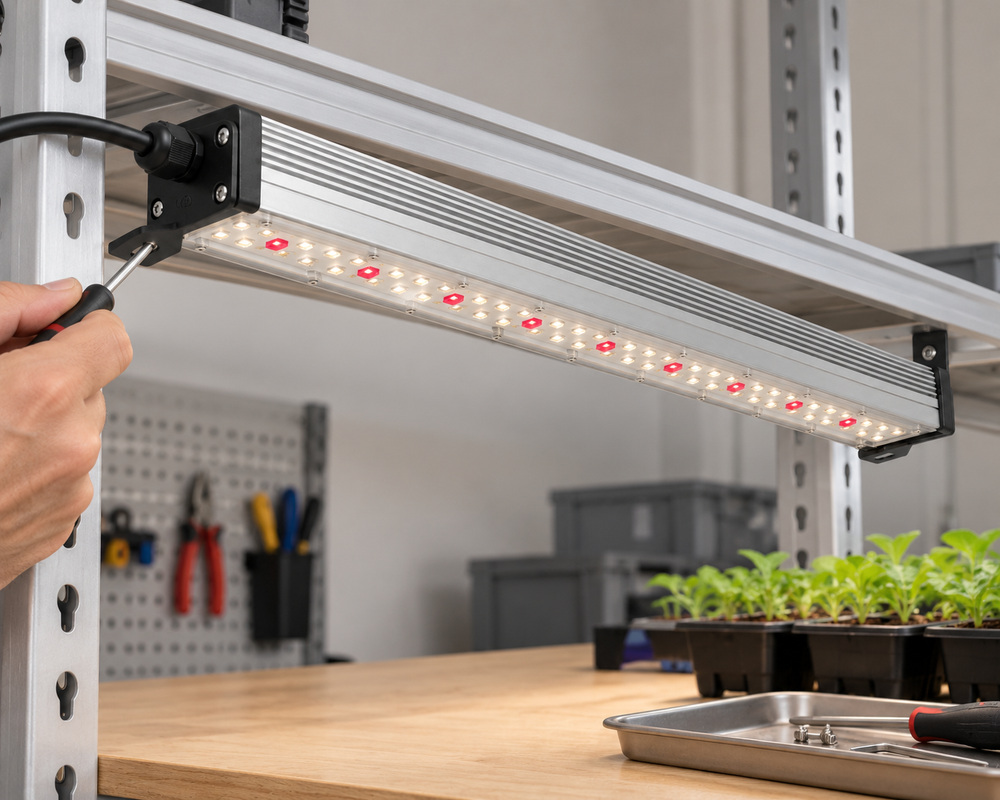
Position sources around the growing area and available supports. A new length or bracket may need structural development. Moving the fixture closer changes coverage, so assess it at the canopy plane where the plants receive light.
Buyer input: Rack retention interface and service-removal route.
Electrical and control interface
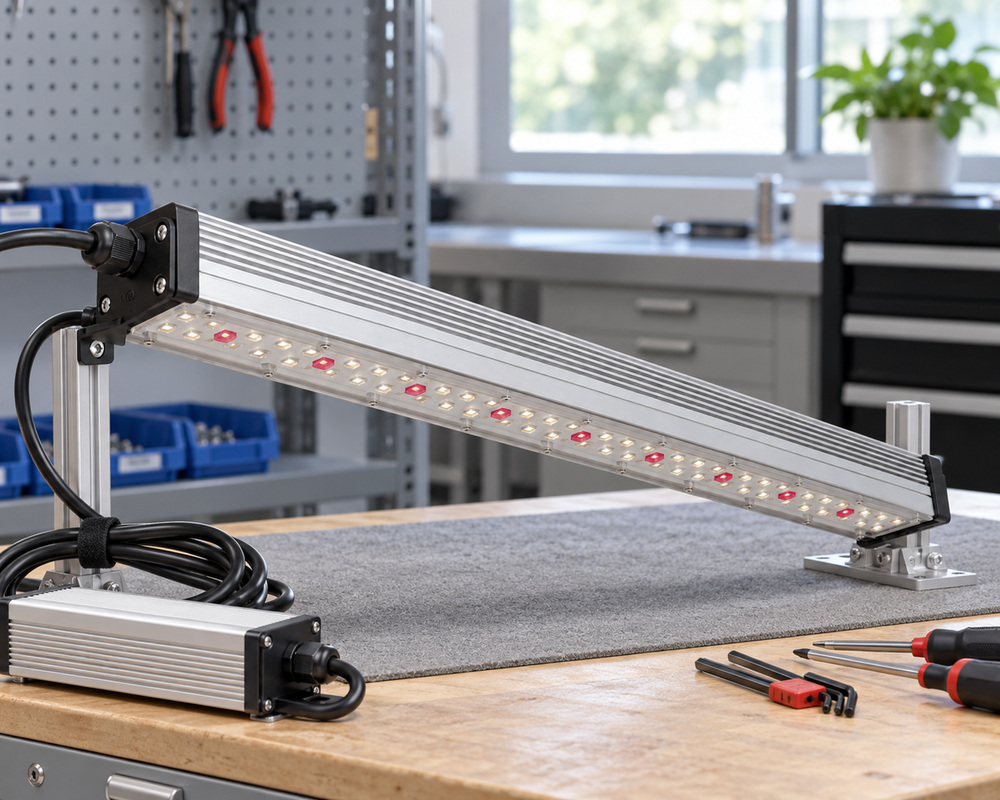
A custom LED grow light can use a driver and controls specified for the project when feasible. Components determine protocol support, dimming range and switching behavior. Different visible LED colors alone establish neither connectivity nor independent channel control.
Buyer input: Controller interface and required operating states.
Thermal path and environmental exposure
Choose housing and protection for the specified humidity, condensation and cleaning exposure. Sealing can restrict heat loss, so assess thermal behavior alongside protection. Define the cleaning method and exposed surfaces before evaluating the assembly; a covered board alone establishes no certified ingress rating.
Buyer input: Ambient conditions at the installed fixture location.
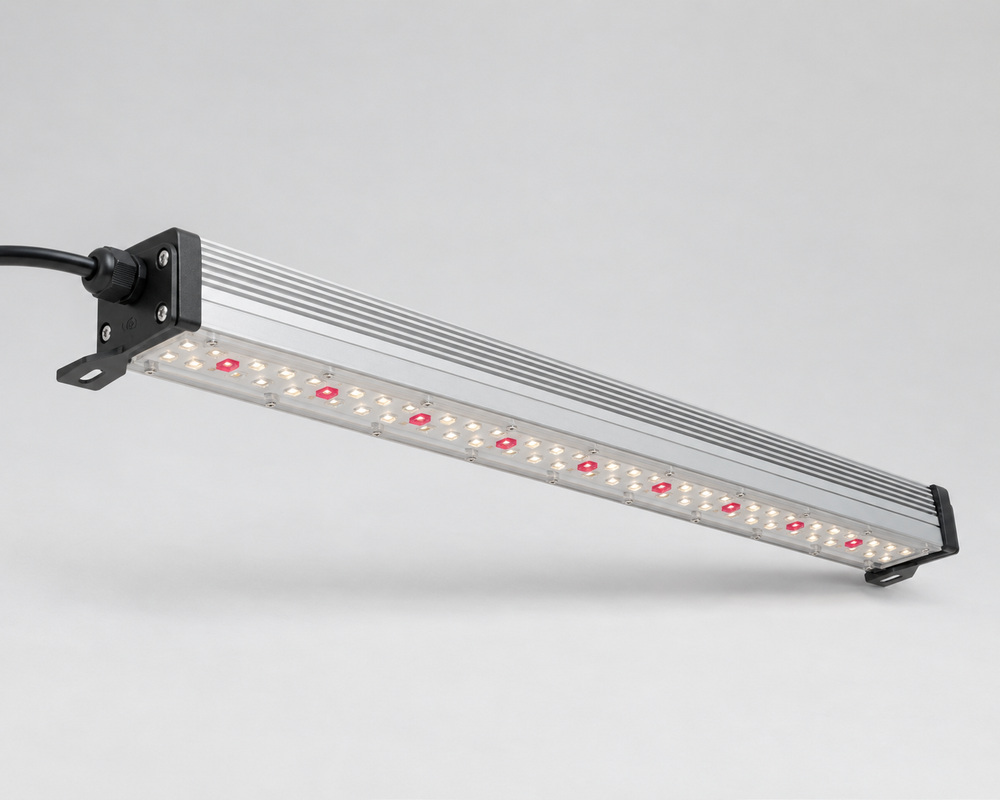
Choose the construction for the mounting height and growing area. A compact bar fits a rack; an overhead arrangement serves a larger space. Compare photon distribution through measurements at the canopy, not the brightness of photographs.
Decision factor
Close rack bar
Overhead multi-bar arrangement
Buyer guidance
Installation geometry
Individual bars integrated within a shelf bay
Several bars suspended above a larger growing area
Choose the geometry that matches crop handling and mounting access.
Electrical organization
Connections follow each rack level
Distribution must coordinate the complete overhead arrangement
Define which parts are supplied as one electrical assembly.
Evaluation plane
Grid follows the shelf and its canopy
Grid follows the overhead area and mounting height
Keep coverage comparisons on a consistent plant-level measurement plane.
Mechanical trade-off
Compact fit with limited service space
Broader layout requiring appropriate suspension and clearance
Balance integration space with the ability to reach service parts.
The feasibility review defines the LED assembly, structural and electrical work, and the specialist evaluations required. Agree that scope before proceeding to a candidate sample.
01
Set the cultivation boundary
VST work: Identify the intended mounting architecture, source goals and necessary specialist evaluation scope.
Stage output: An outline of fixture feasibility, its supply boundary and the cultivation evidence needed separately.
02
Build the proposed LED assembly
VST work: Prepare the candidate housing, covered source layout and electrical interface as an assessable prototype.
Stage output: A fixture sample identifying the source layout, housing and driver architecture to be evaluated.
03
Check the equipment integration
Customer input: Customer supplies rack-fit and cultivation-layout observations.
VST work: VST assesses assembly fit and connection findings. The customer or appointed integrator arranges the representative rack installation. Any VST mockup work, instrumented measurements or external evaluations must be assigned with the setup and deliverables before execution.
Stage output: A list of mounting, service-access and connection issues found in the equipment detail.
04
Release the selected development version
VST work: After the agreed evaluations, record the selected construction and components for production planning.
Stage output: A selected fixture specification defining the construction for subsequent production planning.
Validate custom LED grow lights with the right measurements
Assess source spectrum, canopy photon distribution, heat and electrical operation separately. VST has lighting and thermal capabilities. Specialist quantum measurements may need additional project resources. These method illustrations provide no existing grow-light report or verified crop result.
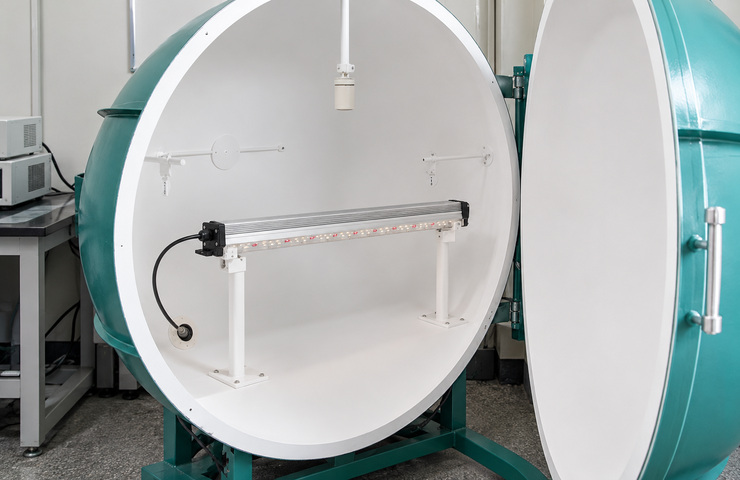
Spectral measurement of the proposed source
Purpose: Identify the spectrum delivered by the selected LED arrangement.
Method: Use an assigned spectroradiometer and applicable sample setup. Record the instrument model, calibration status and source operating state before comparing the spectrum with the agreed target.
Acceptance criteria: Compare the measured spectrum with the defined channel and source targets.
Evidence: No grow-light spectral report is supplied. Agree the measurement scope for the sample.
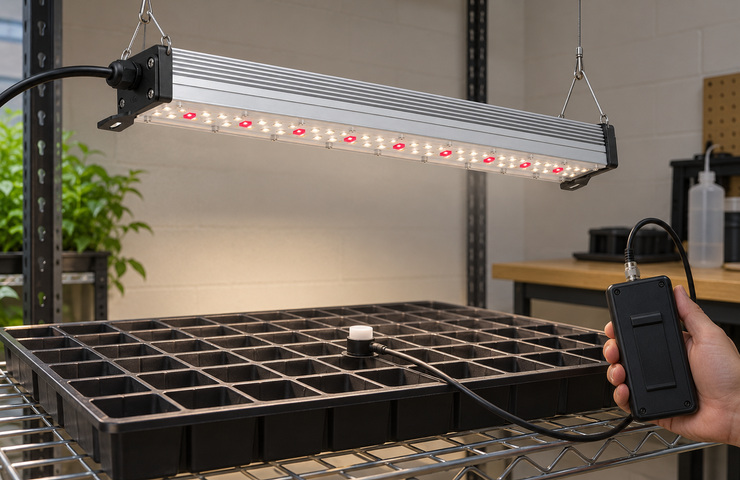
Canopy PPFD distribution assessment
Purpose: Determine photon distribution across the usable growing plane.
Method: At the agreed canopy height, take readings across the specified grid with a level, spectrum-matched quantum sensor. Record calibration status and source operating settings, with the conditions used for each reading.
Acceptance criteria: Agree the canopy plane, coverage criterion and operating state before comparing the recorded grid readings.
Evidence: Measurement resources and records depend on the project. PPFD results alone do not establish crop response.
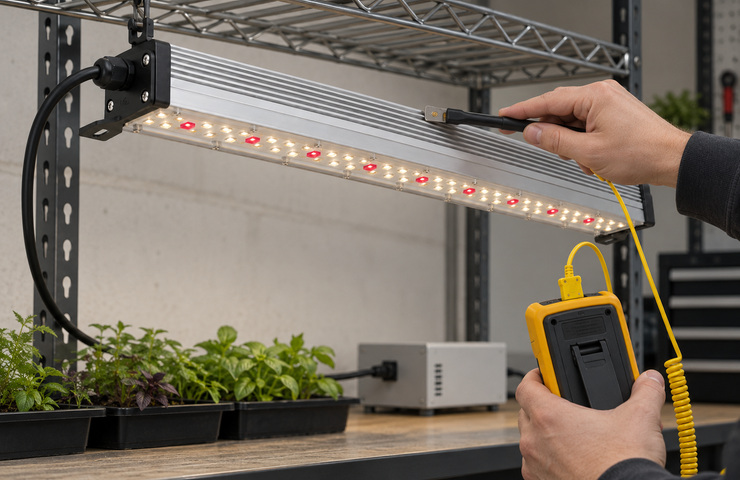
Housing heat rejection check
Purpose: Evaluate temperature under the proposed rack or overhead mounting.
Method: Operate the complete covered assembly and measure accessible housing points with contact probes.
Acceptance criteria: Component thermal margins follow the selected operating and ambient conditions.
Evidence: A thermal assessment belongs to the evaluated build and placement.
Driver and channel operation
Purpose: Check the defined control behavior of the candidate electrical architecture.
Method: Exercise required switching and adjustment states using the selected driver and controller interface.
Acceptance criteria: The source responds as specified without assuming additional channel capability.
Evidence: Functional observations require the actual component pairing used.
Mounting and service fit
Purpose: Prevent the fixture from obstructing rack access or tray handling.
Method: Inspect an unpowered sample in a representative rack support fixture.
Acceptance criteria: Mounts retain the assembly and permit the intended service movement.
Evidence: Fit evidence identifies the host structure and fixture version.
Documents for cultivation evaluation
Candidate fixture and interface specification
Project Specific
Describe the source, mounting and control interface. Photon-output values require applicable measurements.
Optical and environmental evaluation plan
To Confirm
Agree humidity/condensation cycling and the cleaning-exposure procedure before testing. Specify acceptance criteria for enclosure integrity, electrical safety and operation. Appoint a qualified laboratory, or VST after capability is established. Records should identify the assembly, connectors, exposure conditions, observations and results; spectral and quantum measurements require their own agreed scope.
Optical measurement and cultivation-trial responsibilities
To Confirm
For custom LED grow lights, assign spectral and PPFD measurements to VST only when its method and instrument capability are established, or to a qualified laboratory. Record instrument models, calibration status, grid, mounting height, source settings and criteria. The customer or appointed cultivation specialist organizes crop trials. Trial fees and timing are separately agreed and are not included automatically in fixture sampling or production lead times.
The conversation started with how the tray moves through the rack, which helped us spot a mounting conflict. We could then discuss the light assembly without treating the rack itself as part of the product.
It helped to keep the spectral objective separate from the control interface. Our team could decide what needed independent adjustment before discussing a more complicated source-board arrangement.
We needed a clear distinction between a fixture measurement and a plant trial. That made our evaluation plan easier to explain internally and avoided asking the electrical sample to answer an agronomic question.
Growing Systems CompanyTechnical Manager · United States
Plan grow light development and production resources
MOQ approach
For custom LED grow lights, 500 units for light customization and 1,000 for high customization remain general custom-module planning references pending feasibility and a project quotation. Define the proposed model by source board, channels, housing, driver and connection arrangement. The quotation must identify whether a unit counts a finished bar, light module or specified multi-part assembly, and whether different configurations can share a quantity threshold. Crop-evaluation scope and final production minimums need separate agreement.
Sampling support
VST supports samples of the proposed LED assembly, with processing charges. Dedicated boards, housings or fixtures may also incur tooling or mold charges. Eligible sample expenditure may be returned or credited against a later production order. The quotation or order terms set the amount and method. Specialist cultivation evaluations need a separately defined scope.
Lead-time factors
Light customization normally takes 15 to 25 working days for samples and 20 to 30 for bulk production. High customization usually needs 30 to 50 working days for samples and 25 to 35 for bulk production. Timing starts when necessary technical information and applicable sample fees, tooling fees, deposit or other order conditions are complete. Stable-demand orders can reserve key materials for faster later scheduling. Plant trials and specialist evaluations may require separate planning.
Tooling / NRE
A source PCB, dedicated mounting part or custom housing may incur tooling or NRE costs. Eligible tooling or mold charges can be credited against payment for a later production order. Record the qualifying order, amount and method in the commercial terms. Free board iterations and blanket ownership of development resources are not included by default.
Supply stability
VST coordinates suppliers and repeat-production controls for the source and driver specified. Stable-demand orders can prepare materials against forecasts or reserve agreed key materials. Identify substitutions for assessment because electrically similar sources can change the spectrum. Reserved components do not guarantee stock of completed fixtures.
Packaging & logistics
VST customizes packaging, labels, carton marks, barcodes, brand artwork, instruction sheets and user manuals for the grow-light assembly agreed. Protection and identification need to suit the housing, connectors and handling. Shipment coordination is available. List controller inclusion, carton quantities, freight terms and transport schedules explicitly, since a fixture concept does not establish them.
General LED development and acceptance planning guides
Use these general LED guides to organize the specification, evaluation responsibilities and acceptance records for custom LED grow lights. They support order planning and do not provide horticultural measurement reports or crop results.
Reducing after-sales risk in bulk LED product procurement starts with clear specifications, verified testing, controlled samples, and documented acceptance criteria before mass production or…
Managing mixed LED product orders means coordinating different LED strips, linear lights, modules, drivers, accessories, and control parts under one clear technical and commercial…
Grow light questions that fixture specifications cannot settle
Custom LED grow lights need decisions about crop evidence, channel controls and the equipment included in the order. A changed LED source can also affect light delivery, even when electrical input is similar. These questions explain those remaining issues. Contact VST about requirements that are still open; the development discussion can begin before every cultivation assumption is settled.
Can custom LED grow lights guarantee a crop yield?+
A fixture description cannot guarantee yield. Crop response depends on the crop and growing conditions and needs appropriate trials. When assessing custom LED grow lights, use each form of evidence for the question it can answer. Lamp measurements and biological trial results establish different things.
Evidence
What it addresses
Spectrum measurement
Source spectral output
Canopy PPFD grid
Spatial photon delivery
Cultivation trial
Crop response in defined conditions
Does a multicolor LED layout provide independent spectral control?+
Independent spectrum adjustment needs a board, driver and controller that support separate channels. Different visible LED colors alone do not establish that function. Decide whether your operating strategy needs independent channel changes or a fixed source mix, then assess the electrical design against that requirement.
Does the quoted light include racks and cultivation controls?+
The quotation must identify any rack, controller or cultivation equipment included with the luminaire. Otherwise, treat them as separate supply items. A mounting concept can show the connection between parts without supplying the whole system. Assign responsibility for the installation environment and final control integration separately.
Can a replacement LED preserve the same horticultural behavior?+
Check more than electrical interchangeability. A changed spectrum or source layout can alter delivered light despite similar nominal input. For custom LED grow lights, compare the substitute with the released specification and decide which optical checks are needed before accepting the changed version.